

Hot Keyword:
Author:Baby & Adult Diaper Materials FROM:Diaper Materials Manufacturer TIME:2026-11-19
Disposable hygiene raw material prices are influenced by much more than the cost of individual materials. Changes in commodity markets, manufacturing expenses, supply and demand, logistics, exchange rates and purchasing volumes can all affect the final quotation.
For diaper, sanitary napkin, adult incontinence and underpad manufacturers, understanding these factors helps purchasing teams make better decisions, compare supplier quotations and plan procurement more effectively.
This guide explains the major factors affecting disposable hygiene raw material prices and how buyers can manage cost fluctuations.
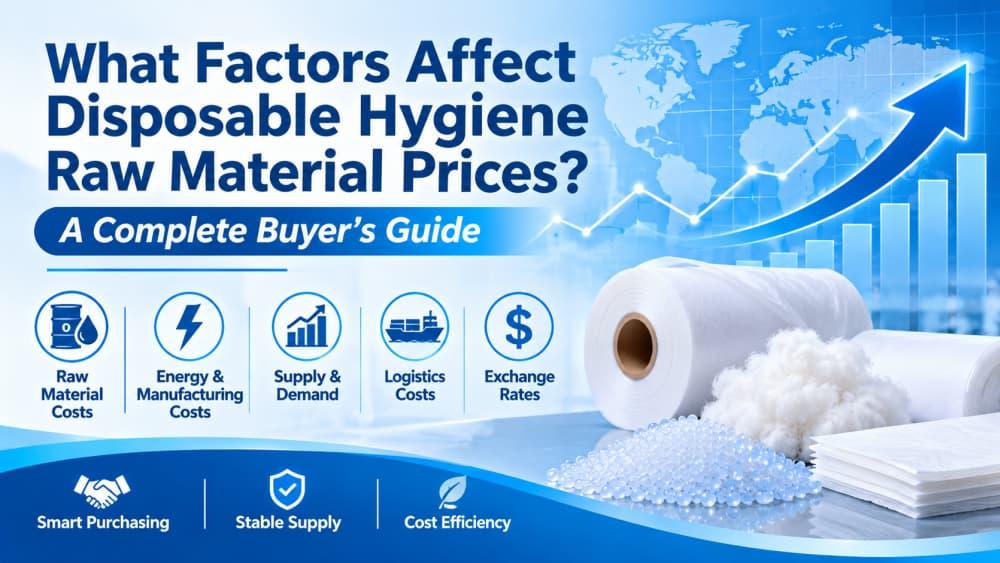
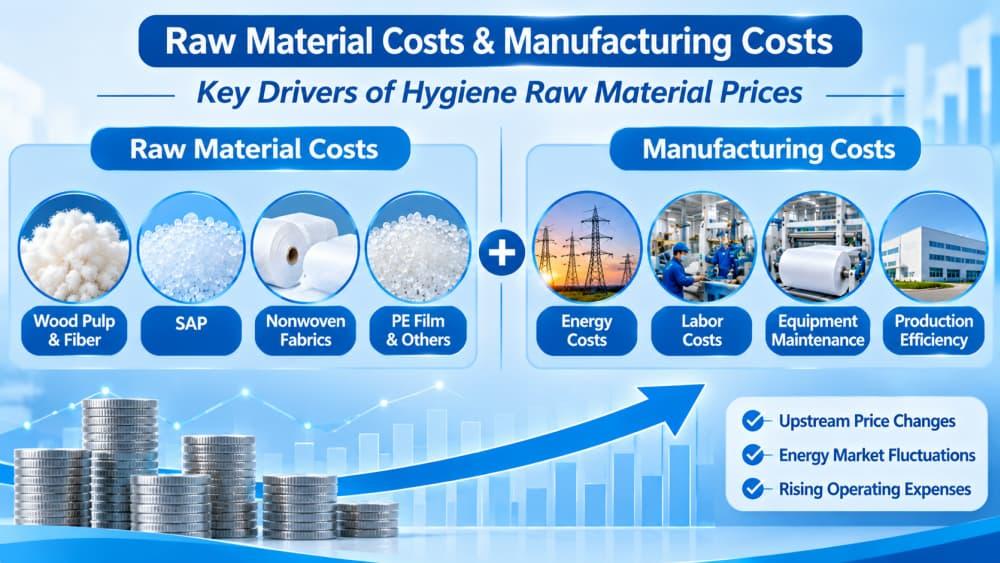
Disposable hygiene products rely on various raw materials, including nonwoven fabrics, superabsorbent polymer (SAP), fluff pulp, PE film, adhesives, elastic materials and packaging materials. The prices of these materials may fluctuate due to changes in upstream commodity markets, production capacity and supplier availability.
Some hygiene raw materials, such as polypropylene-based nonwovens, polyethylene films and certain adhesives, are influenced by petroleum-related feedstock prices. Changes in crude oil and petrochemical markets can affect manufacturing costs and eventually influence material quotations.
Fluff pulp and other fiber-based materials are affected by pulp market conditions, forestry resources, production costs and international trade. Changes in pulp prices can have a noticeable impact on the cost of absorbent hygiene products.
Manufacturing hygiene raw materials requires electricity, heat and other energy resources. Energy-intensive processes such as nonwoven production, film extrusion, coating and converting can be affected by electricity and fuel price changes.
Labor expenses, equipment maintenance, depreciation, production efficiency and factory operating costs also contribute to raw material prices. Manufacturers with different production technologies, automation levels and operating structures may have different cost bases.
Production efficiency, waste rates, downtime and utilization of manufacturing capacity influence the cost per unit. Efficient production may help manufacturers maintain more competitive prices even when external costs fluctuate.
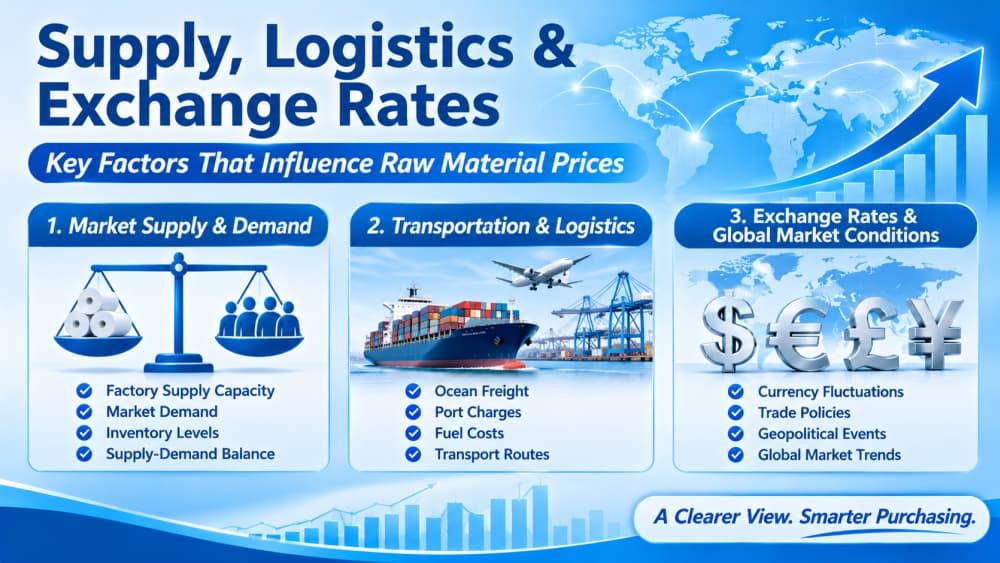
When manufacturers reduce production, factories experience maintenance shutdowns or supply disruptions occur, available material quantities may decrease. Limited supply can create upward pressure on prices.
Demand from diaper, sanitary napkin, adult care and other hygiene product manufacturers can affect market prices. Stronger demand may increase competition for raw materials, while weaker demand may create more competitive quotations.
Inventory levels across manufacturers, distributors and buyers also affect market conditions. When inventory is low, buyers may face longer lead times and less flexibility. Higher inventory levels may help stabilize supply and provide more purchasing opportunities.
International shipping costs can significantly influence the total procurement cost of imported hygiene raw materials. Freight rates may change due to vessel availability, seasonal demand, route conditions and shipping market fluctuations.
Fuel prices, port handling fees, container availability and other logistics-related expenses can affect the transportation cost of raw materials from factories to buyers.
Changes in shipping routes, port congestion, geopolitical events and disruptions to international supply chains may increase delivery times or transportation expenses.
Exchange rate changes can affect the cost of imported raw materials. Buyers purchasing materials in US dollars or other foreign currencies may experience changes in their actual purchasing costs even when the supplier's quoted price remains unchanged.
Import duties, tariffs, trade restrictions and customs policies may influence the total cost of international procurement. These factors vary by country and product category.
Global economic conditions, geopolitical developments and international trade disruptions can affect raw material availability, transportation and commodity markets, creating additional pricing uncertainty.
Order quantity can influence unit pricing. Larger orders may allow manufacturers to optimize production scheduling, packaging, material utilization and transportation arrangements. Smaller orders may involve relatively higher production or handling costs per unit.
Material specifications directly affect material consumption and manufacturing costs. For nonwoven fabrics, films and other roll materials, GSM, width, roll diameter and other technical specifications can influence the quotation.
Special colors, customized widths, specific performance requirements, special packaging and other customized specifications may require additional production arrangements and affect pricing.
| Factor | Examples | Potential Price Impact |
|---|---|---|
| Order Quantity | Small orders, bulk orders, annual purchasing plans | May affect unit cost, production efficiency and freight allocation |
| Material GSM | 20 GSM, 25 GSM, 30 GSM nonwoven | Higher material weight generally increases material consumption and cost |
| Material Width | Customized roll width | May affect production efficiency, material utilization and roll costs |
| Customized Requirements | Special colors, performance requirements, packaging | May require additional production processes or customization costs |
| Packaging | Standard packaging, customized packaging | May affect packaging expenses and transportation efficiency |
Suppliers may use different upstream sources, production processes and material formulations. These differences can affect the cost structure and final quotation.
Two quotations for the same material name may not represent exactly the same product. Buyers should compare technical specifications, performance requirements, tolerances, packaging and quality consistency rather than focusing only on the quoted price.
Manufacturers may differ in production capacity, lead time, quality control, technical support, order flexibility and export experience. These factors can contribute to differences in supplier pricing.
| Comparison Item | Supplier A | Supplier B |
|---|---|---|
| Material Specifications | Check GSM, width and performance | Check whether specifications are identical |
| Quoted Price | Unit price and quotation validity | Unit price and quotation validity |
| Quality Consistency | Production stability and quality control | Production stability and quality control |
| Lead Time | Production and delivery schedule | Production and delivery schedule |
| Packaging | Packaging details and loading efficiency | Packaging details and loading efficiency |
| Payment Terms | Payment conditions | Payment conditions |
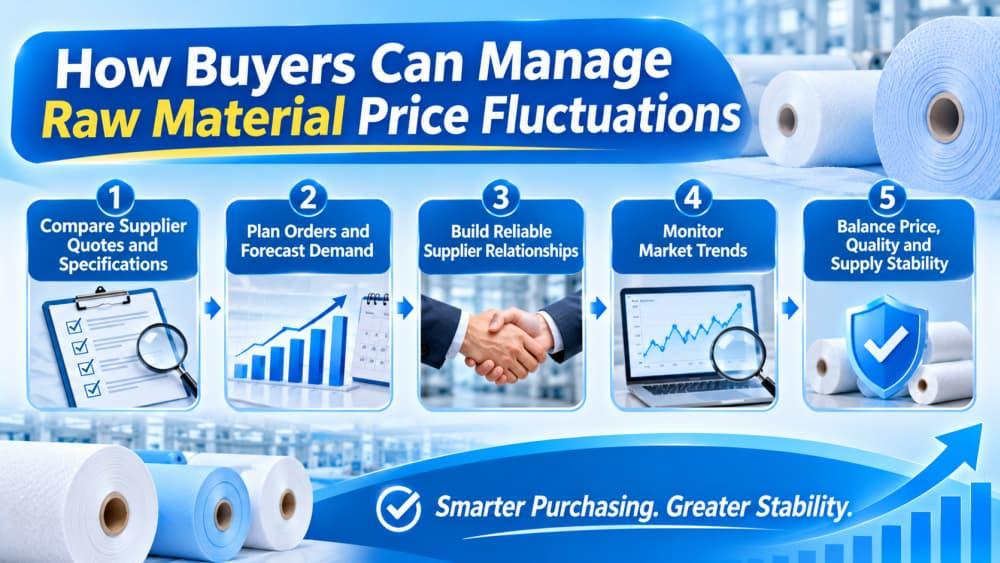
When comparing suppliers, buyers should ensure that material specifications, GSM, width, performance requirements, packaging and delivery terms are consistent. This helps avoid misleading price comparisons.
Demand forecasting and purchasing planning can help manufacturers avoid urgent orders, reduce inventory pressure and improve procurement efficiency.
Long-term supplier relationships can improve communication, production planning and supply stability. Regular discussions about market changes and purchasing schedules can help both sides manage fluctuations more effectively.
Tracking changes in major raw materials, transportation costs, exchange rates and market supply conditions can help buyers make more informed purchasing decisions.
The lowest quotation is not always the best purchasing choice. Buyers should consider material quality, production consistency, delivery reliability, technical support and total procurement costs when selecting suppliers.
Prices may change due to upstream commodity prices, manufacturing costs, market supply and demand, transportation, exchange rates and global market conditions.
Materials such as polypropylene-based nonwoven fabrics, PE film, SAP, fluff pulp and certain adhesives may be affected by changes in commodity markets, supply conditions and production costs.
Not necessarily. Larger orders may improve production and logistics efficiency, but pricing also depends on specifications, material costs, production schedules and market conditions.
Differences may come from material specifications, raw material sources, production efficiency, quality standards, packaging, order quantity and delivery terms.
Buyers can improve demand forecasting, compare quotations based on consistent specifications, monitor market trends, optimize purchasing schedules and establish stable supplier relationships.
Purchasing decisions should be based on actual demand, inventory levels, cash flow, storage capacity and market outlook. Overstocking may create additional inventory and financial risks.
Disposable hygiene raw material prices are influenced by a combination of upstream material costs, manufacturing expenses, market supply and demand, transportation, exchange rates and purchasing specifications.
For hygiene product manufacturers, understanding these factors can help improve procurement planning, compare suppliers more accurately and manage cost fluctuations more effectively.
By combining market awareness, specification-based purchasing, demand forecasting and reliable supplier relationships, buyers can build a more stable and efficient raw material supply chain.

 MP/WhatsApp: +86-18050806553
 Manufacturer Address:Juhua Industry Matou Town, Nanan City Fujian Province China