

Hot Keyword:
Author:Baby & Adult Diaper Materials FROM:Diaper Materials Manufacturer TIME:2026-11-18
Sustainability is becoming an increasingly important consideration in the disposable hygiene industry. Manufacturers of baby diapers, adult incontinence products, sanitary napkins and other hygiene products are under growing pressure to improve material efficiency, reduce environmental impact and explore more sustainable solutions.
For raw material manufacturers and suppliers, this change creates both challenges and opportunities. Material selection, product performance, manufacturing efficiency and supply chain transparency all play a role in supporting more sustainable hygiene products.
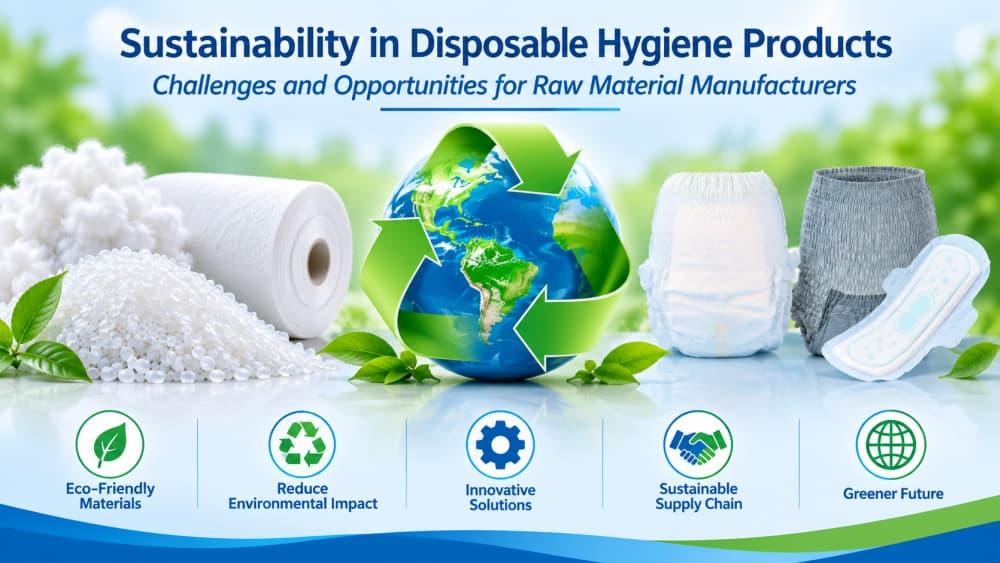
Disposable hygiene products are designed for convenience, hygiene and reliable performance. However, their single-use nature means that material consumption and waste management have become important industry concerns.
Consumers, brand owners, manufacturers and regulators are increasingly paying attention to environmental impact throughout the product lifecycle, from raw material sourcing and production to packaging, transportation and disposal.
For hygiene product manufacturers, sustainability is no longer limited to marketing claims. It can influence material sourcing decisions, customer requirements, product development and long-term supplier relationships.
Raw material suppliers that understand these requirements and provide reliable technical information may be better positioned to support manufacturers developing products with improved environmental profiles.
Environmental considerations cannot replace the fundamental requirements of disposable hygiene products. Absorbency, softness, liquid distribution, leakage protection, skin comfort, processing stability and cost must still meet the intended application.
Different raw materials contribute differently to the overall environmental profile of disposable hygiene products. Understanding their sourcing, composition, processing and usage can help manufacturers identify potential improvement opportunities.
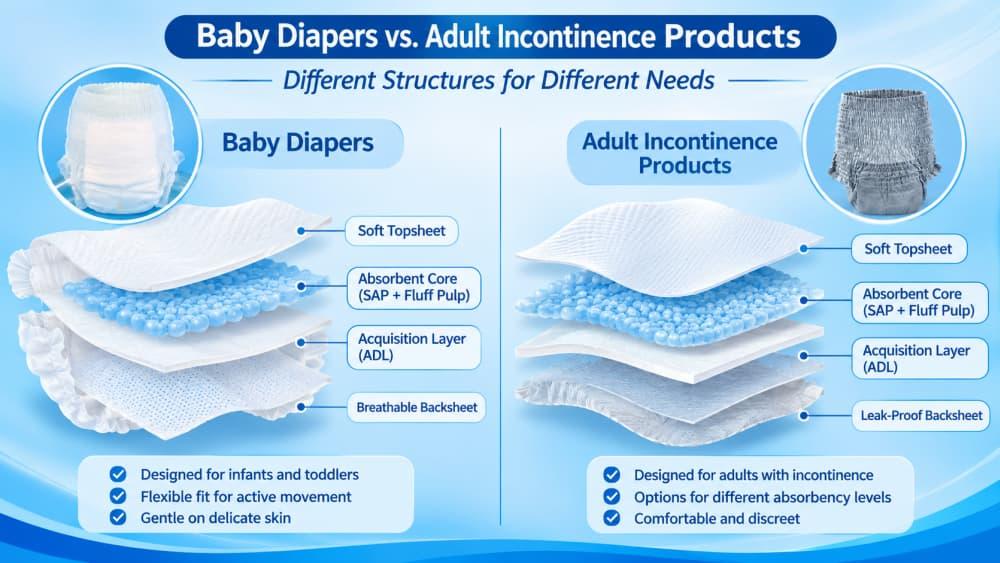
Fluff pulp is widely used in absorbent hygiene products because of its liquid absorption and distribution properties. Sourcing practices, forestry management, pulp production processes and transportation are important factors when evaluating its environmental profile.
Manufacturers may consider responsibly sourced fiber options and supplier documentation when developing material sourcing strategies.
Nonwoven fabrics are used in topsheets, backsheets, acquisition layers, leg cuffs and other components. Material weight, fiber composition, manufacturing efficiency and functional performance can all influence material consumption and environmental considerations.
Reducing unnecessary material usage while maintaining softness, strength, liquid handling and production stability can be one practical approach to improving material efficiency.
SAP is an important component of many absorbent cores. Its absorption capacity and retention performance help manufacturers design products that meet different absorbency requirements.
Optimizing SAP usage and absorbent core design may help reduce material consumption in some applications. However, the balance between SAP, fluff pulp and other absorbent components must be validated through product testing.
Backsheet films, fastening tapes, elastic components and other functional materials also contribute to product performance and overall material consumption.
Potential improvements may include optimizing thickness, reducing production waste, improving material utilization and evaluating alternative compositions where technically appropriate.
Material innovation is creating new opportunities for the hygiene industry. Researchers and manufacturers are exploring renewable feedstocks, alternative fibers, improved material structures and production technologies that may help reduce environmental impact.
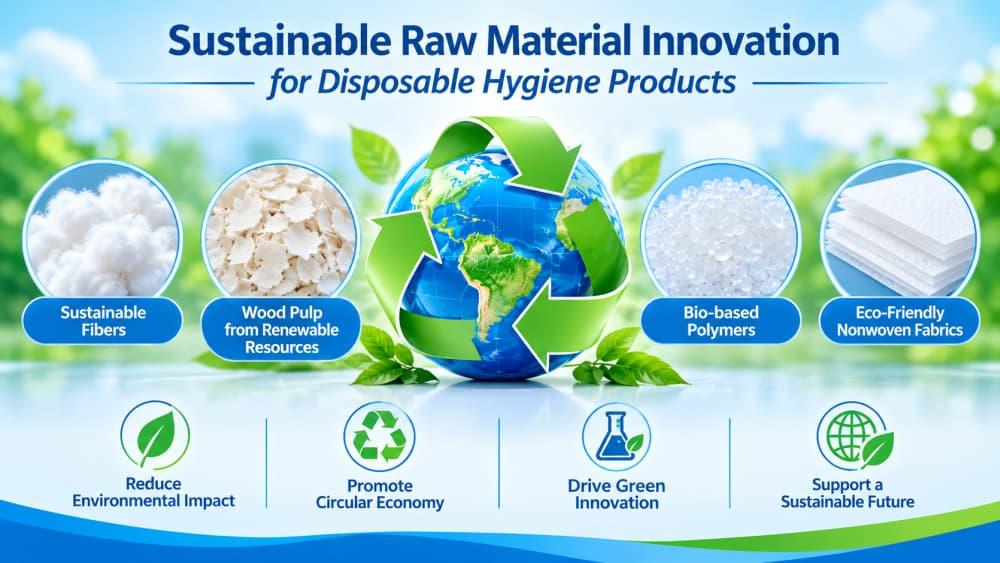
Renewable resources can provide alternatives to materials derived entirely from fossil-based feedstocks. Fiber-based materials from responsibly managed sources are one example of how sourcing decisions may contribute to sustainability strategies.
Nevertheless, renewable sourcing alone does not determine a material's total environmental impact. Processing requirements, energy consumption, transportation and end-of-life conditions should also be considered.
Bio-based polymers and other materials produced partly or entirely from biological resources are attracting attention across multiple industries, including disposable hygiene.
Potential applications depend on material properties such as softness, flexibility, strength, moisture resistance, compatibility and production stability. Bio-based content should not automatically be interpreted as biodegradable or compostable.
Lightweight material design is another important area of innovation. By optimizing material weight, structure and performance, manufacturers may be able to reduce raw material consumption without compromising product functionality.
Any material reduction should be validated carefully to ensure that the finished product continues to meet absorbency, leakage protection, comfort and quality requirements.
Improving recyclability is challenging for many disposable hygiene products because they may contain multiple materials, absorbent components and contamination after use.
Material simplification, compatible material combinations and improved waste management systems may support future development. Actual recycling feasibility depends on local infrastructure, product composition and collection systems.
New materials must meet the functional requirements of the products in which they are used. A material that offers environmental advantages but performs poorly in absorbency, softness, strength or liquid handling may not be suitable for commercial production.
Manufacturers should conduct application-specific testing before introducing new materials into production.
Some sustainable material alternatives may have higher purchase costs, limited availability or additional processing requirements. Manufacturers must evaluate whether the benefits justify the overall cost under their production conditions and market positioning.
Changes in material composition, thickness, stiffness, surface properties or bonding behavior may affect machine operation and product consistency.
Trial runs are important for evaluating feeding performance, bonding, cutting, waste generation, line speed and finished-product quality before a material change is approved.
Environmental claims need clear definitions and supporting evidence. Terms such as recyclable, biodegradable, compostable, renewable and bio-based describe different characteristics and should not be used interchangeably.
Suppliers should provide accurate product information, relevant test results and documentation that supports the specific environmental claims being made.
Sustainability involves more than the material itself. Supplier selection, manufacturing efficiency, product quality, logistics and communication all contribute to a more responsible supply chain.
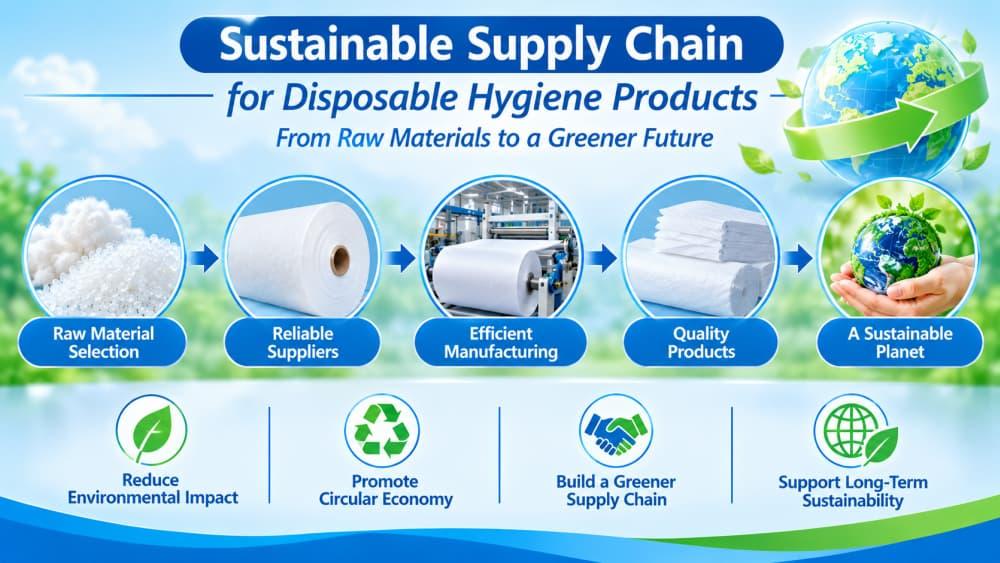
Manufacturers can evaluate suppliers based on product quality, sourcing information, technical capabilities, production consistency, environmental management practices and transparency.
Reliable suppliers should be able to provide clear specifications and communicate changes that may affect material performance or product composition.
Reducing raw material waste, improving production yield, controlling defects and optimizing energy consumption can contribute to manufacturing efficiency.
Consistent raw material quality also helps manufacturers reduce unnecessary adjustments, rejected products and production losses.
Packaging optimization and efficient transportation planning may help reduce unnecessary resources used throughout the supply chain.
However, packaging must still protect materials from moisture, contamination, damage and other conditions that could affect their quality during storage and shipment.
Closer cooperation between hygiene product manufacturers and raw material suppliers can support material innovation, product testing, waste reduction and technical improvement.
Sharing specifications, trial results, production feedback and environmental requirements helps both parties identify practical opportunities for improvement.
Before evaluating alternatives, manufacturers should identify the required performance characteristics, product application, target cost, processing conditions and relevant environmental objectives.
Suppliers should provide material specifications, composition information where available, test reports, certifications when applicable and clear explanations of any environmental claims.
Laboratory tests and production trials can help determine whether a new material is suitable for the intended application. Evaluation should include processing stability, finished-product performance, quality consistency and material consumption.
Material purchasing decisions should consider more than unit price. Manufacturers may also evaluate waste rates, material usage, transportation, production efficiency, product quality and the reliability of supply.
A sustainable material solution should provide a practical balance between environmental objectives, product performance and commercial feasibility.
Sustainability may relate to raw material sourcing, renewable content, manufacturing efficiency, material reduction, environmental impact and end-of-life considerations. No single factor determines the overall sustainability of a material.
No. Bio-based materials are made partly or entirely from biological resources, but they are not necessarily biodegradable. Biodegradability depends on the material's chemical structure and the conditions required for degradation.
Some alternatives may be suitable for specific applications, but replacement requires technical evaluation. Absorbency, softness, strength, processing compatibility, quality and cost must be considered before commercial use.
Manufacturers can improve material utilization through optimized product design, accurate material specifications, stable production processes, better cutting efficiency, quality control and reduced defect rates.
Buyers can ask about material composition, sourcing practices, environmental certifications, production processes, product specifications, technical test results, packaging options and the evidence supporting sustainability-related claims.
Sustainability is creating new opportunities for innovation and improvement throughout the disposable hygiene industry. Raw material sourcing, material efficiency, product design, manufacturing processes and supply chain cooperation all play important roles.
For raw material manufacturers and suppliers, the goal is not simply to introduce materials with environmental claims. It is to develop and supply reliable solutions that combine practical sustainability improvements with the performance, quality and cost requirements of disposable hygiene products.
As the industry continues to evolve, transparent information, technical cooperation and continuous material innovation will remain important in supporting more sustainable hygiene product development.

 MP/WhatsApp: +86-18050806553
 Manufacturer Address:Juhua Industry Matou Town, Nanan City Fujian Province China