

Hot Keyword:
Author:Baby & Adult Diaper Materials FROM:Diaper Materials Manufacturer TIME:2026-11-04

Short answer: Disposable diaper leakage rarely comes from a single raw material defect. It usually results from the combined effect of topsheet intake, absorbent core performance, barrier material limits, elastic fit quality, product structure geometry, and converting process stability. For diaper factories, effective root-cause analysis requires separating material-lot variation from design-spec deviation, rather than attributing all leak incidents to one component supplier.
Contents
Disposable diaper leakage in mass production rarely originates from a single raw-material defect or one-off design mistake. For hygiene-product factories producing baby diapers or adult incontinence articles, liquid escape can stem from raw-material property gaps, poor matching between multi-layer components, structural-design flaws, converting-process drift, or combined effects of multiple variables. Even premium-grade single-material lots will produce leaking finished goods if layer-stacking geometry, liquid-spreading logic or elastic-fit specifications do not match real-world usage conditions.
This article separates raw-material-driven risks from product-design-driven risks, targeting R&D, purchasing and quality teams at diaper manufacturing plants. It clarifies which observations point to incoming-material inspection items and which belong to finished-product structure validation. It should be emphasized that satisfactory lab test figures for one isolated component cannot guarantee zero-leak finished-diaper performance; real-world assessment requires multi-material combined testing under agreed-upon liquid-challenge protocols. When tracing batch-wise leak complaints, manufacturers need to distinguish material-lot variation from design-spec deviation before deciding whether to adjust sourcing or revise product blueprints. For qualified diaper raw-material alternatives, factories can consult material parameters and sample conditions with JUHUA for reference.
The topsheet non-woven and acquisition-distribution layer (ADL) govern initial liquid intake and lateral spreading. Material-related failure modes here often trigger early-stage side-leak or surface-rewet phenomena, even when the absorbent core itself has sufficient theoretical absorption capacity.
Important boundary note: topsheet and ADL material defects explain part of leakage cases, but side leakage can also appear with perfectly qualified ADL if leg-cuff geometry or elastic pre-tension is insufficient. Do not attribute all side-leak complaints merely to incoming non-woven material lots.
Super-absorbent polymer (SAP) and fluff-pulp form the absorbent core system. Many factory teams mistakenly assume higher SAP dosage alone can eliminate leakage. In reality, multiple material-property parameters interact, including CRC, AUL under defined pressure, particle-size distribution, fluff-pulp fiber length and core-wrap paper performance.
Even if SAP and fluff-pulp lots pass independent lab testing, uneven SAP dispersion during converting will create similar leak symptoms. This situation belongs to process-execution rather than raw-material quality defect, requiring separate root-cause judgment.
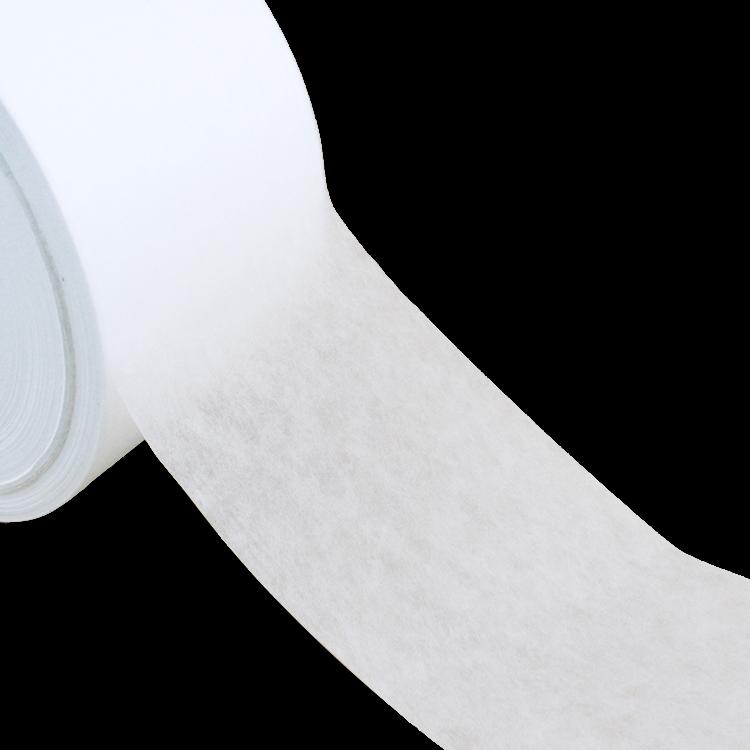
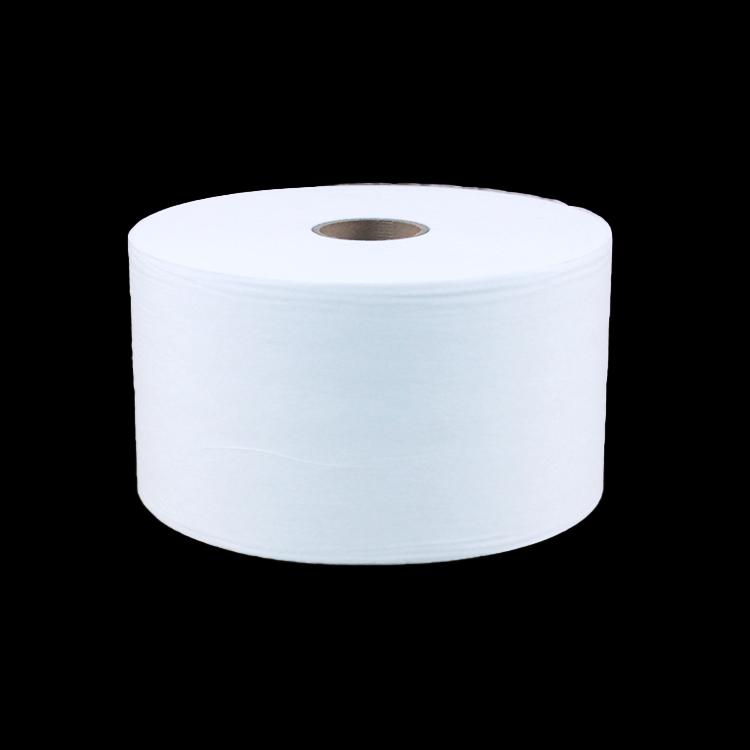
Backsheet breathable laminated PE-film, leg-cuff non-woven and related barrier materials provide physical containment against liquid escaping outward. Material-originated leakage here mostly appears as outer-sheet wet-through or leg-cuff seepage.
Barrier-material performance must be assessed together with finished-product cuff height and elastic layout. A good barrier material cannot compensate if leg-cuff forming geometry leaves large physical gaps between barrier and human skin. You can review related leg-cuff material specifications on JUHUA spunbond hydrophobic nonwoven for leg cuff product page.
Spandex elastic filaments used for leg cuffs and waistbands determine dynamic fit performance. Many leak incidents relate to elastic-material relaxation behavior rather than absorbent-material capacity.
Elastic pre-tension setting during production is a converting-design parameter. Factories should separate raw-material elastic-relaxation test results from production-line tension-setup parameters when investigating batch complaints.
Even when every incoming raw-material batch meets respective TDS specification, finished diapers may still leak due to product-structure and design decisions. These factors belong to product-design domain instead of raw-material quality issues:
This set of factors explains why identical raw-material lots can deliver completely different leak-complaint rates under two different product-design blueprints. R&D teams need to run design-verification trials using identical incoming-material batches to isolate design-related risks.
| Observed leak phenomenon | Possible raw-material root suspects | Possible product-design / converting suspects | Suggested verification test |
|---|---|---|---|
| Local surface rewet after wet-challenge | SAP low AUL; unstable topsheet hydrophilic property | Insufficient ADL coverage area; over-compressed multi-layer stack | Multi-layer stack rewet test under defined pressure |
| Side leakage during dynamic movement | Elastic high relaxation; leg-cuff non-woven hydrophobic failure | Leg-cuff height insufficient; elastic layout offset; single-cuff structure | Dynamic fit liquid-challenge finished-product trial |
| Outer backsheet spot-wet-through | Backsheet film pin-hole / lamination delamination | Excessive local mechanical tension during converting | Backsheet barrier pin-hole pressure test |
| Core gel-blocking & liquid bypass | SAP fine-particle fraction out-of-specification | Poor SAP distributing geometry; missing ADL layer | Core cross-section dissection observation & liquid-infiltration test |
| Rear-waist back leakage | Waist-band elastic relaxation deviation | Core rear-margin dimension; rear-waist barrier design | Finished-product rear-zone liquid-challenge test |
When facing rising leak-related customer complaints, diaper-plant quality and R&D teams can follow this step-wise workflow to separate material risks versus design risks:
No. Higher-capacity SAP improves theoretical absorption volume, but cannot compensate for defects including poor liquid-distribution structure, insufficient leg-cuff sealing, elastic-fit gaps or backsheet-barrier failure. Leakage is a system-level result of multi-material and structural cooperation, rather than being governed by only one absorbent raw-material indicator.
Not necessarily. Leak symptoms can be reproduced even with fully-compliant raw-material lots, triggered by unreasonable product-design specifications, converting-process drift or size-range mismatch for end-users. Cross-validation trials with reference-standard materials are required to tell material-root causes apart from design-root causes.
Focus on these items: leg-cuff non-woven hydrophobic performance, elastic-filament relaxation-rate under cyclic stretching, ADL basis-weight and loft, and backsheet barrier integrity. At the same time, finished-product physical dimensions of leg-cuff standing height and elastic layout must be measured as design-check items.
Independent-material lab-testing cannot simulate multi-layer stacking, thermal-bond compression, web-tension influence and real-use dynamic mechanical stress. Material-to-material matching performance only emerges after compounding and converting, so finished-product verification is irreplaceable.
Include: finished-product batch-code, leak-failure-mode description, complete purchasing-specification for related raw-materials, COA records of suspect lots, standardized liquid-challenge-test-data of retained finished-samples, and key product-structure dimension parameters. Complete information accelerates accurate technical communication with material suppliers such as JUHUA.
Disposable-diaper leakage comes from intertwined raw-material factors and product-design factors. Topsheet-ADL liquid-intake performance, SAP-fluff core absorption-retention properties, backsheet-leg-cuff barrier capability and elastic-fit characteristics each carry material-driven risk points. Nevertheless, even fully-qualified individual raw-materials may still generate leakage under inappropriate structural-design or converting-parameter settings.
For diaper-manufacturing-plant teams, effective troubleshooting needs to distinguish material-lot variation from design-spec deviation via standardized sample-retention, liquid-challenge testing and cross-validation production trials. Avoid simplifying complex leak-failure events into single-indicator raw-material quality-accusation. When adjusting material-specifications or screening alternative raw-material suppliers, purchasers should define complete test-conditions and application-scenario boundaries, and arrange sample-validation before formal mass-switching. Contact JUHUA if you need technical reference for diaper raw-material selection and sample-evaluation arrangements.

 MP/WhatsApp: +86-18050806553
 Manufacturer Address:Juhua Industry Matou Town, Nanan City Fujian Province China