

Hot Keyword:
Author:Baby & Adult Diaper Materials FROM:Diaper Materials Manufacturer TIME:2026-11-03
SAP paper is an absorbent-core material used in disposable diapers, but its performance depends on more than the amount of superabsorbent polymer it contains. For diaper manufacturers, selecting the right SAP paper requires understanding its position within the absorbent core, its basis weight (GSM), and its roll stability during storage and converting.
A suitable SAP paper specification should match the diaper's core design, absorption targets, production conditions, and quality requirements. This guide explains how B2B buyers can evaluate these factors, compare technical specifications, and identify potential material issues before bulk purchasing.
SAP paper generally refers to an absorbent paper structure that incorporates superabsorbent polymer (SAP), or a paper-based material designed to work with SAP in an absorbent core.
Depending on the product construction, SAP paper may contain fluff pulp, SAP particles, supporting fibers, or multiple paper layers. Its exact composition varies by manufacturer and product specification.
Unlike loose SAP powder, SAP paper provides a preformed material structure that can support more controlled material handling and integration into an absorbent-core design.
In a disposable diaper, the absorbent core is positioned between the topsheet and backsheet. SAP paper may be incorporated into this core structure, depending on the manufacturer's design.
Some designs use SAP-containing paper as part of a composite absorbent layer, while others combine it with fluff pulp, carrier tissue, or additional distribution materials.
Important: SAP paper is not a universal replacement for the entire absorbent core. Its role depends on the material composition, core architecture, and finished-diaper design.
The same SAP paper specification may perform differently when used in different core structures. Buyers should consider:
Before requesting a quotation, manufacturers should define the material's intended position and function within the diaper core.
SAP paper, carrier tissue, and airlaid paper are related to absorbent-core construction, but they are not interchangeable terms.
| Material | Typical Composition | Primary Role | Key Evaluation Factors |
|---|---|---|---|
| SAP Paper | Paper-based structure containing SAP or designed for SAP integration | Contributes to absorbent-core construction and liquid retention | SAP content, GSM, structure, absorption performance, roll stability |
| Carrier Tissue | Usually cellulose-based tissue paper | Supports and contains fluff pulp and SAP during core formation | GSM, tensile strength, wet strength, width, roll quality |
| Airlaid Paper | Airlaid fiber structure, commonly using fluff pulp and other fibers | Provides an absorbent or distribution structure | GSM, density, thickness, absorbency, uniformity |
Carrier tissue is commonly used to help contain the fluff pulp and SAP mixture within the absorbent core. It can support core integrity and reduce the risk of SAP particles damaging adjacent layers.
Its function differs from SAP-containing paper because carrier tissue does not necessarily contain SAP itself.
Some absorbent-core designs use carrier tissue, while others use alternative wrapping or supporting materials. The decision should be based on the actual core construction.
Supplier terminology can vary. A product described as SAP paper may refer to SAP composite paper, SAP-containing airlaid paper, or another absorbent paper structure.
Before comparing quotations, confirm:
GSM stands for grams per square meter (g/m²). It measures the basis weight of a material by dividing its mass by its surface area.
For SAP paper, GSM is an important specification because it describes the weight of the complete paper structure per unit area. However, GSM alone does not determine absorption capacity, thickness, or finished-diaper performance.
When reviewing a technical data sheet, buyers should confirm whether the reported GSM represents the complete SAP composite paper, the paper base before SAP incorporation, or a multi-layer structure including supporting materials.
Different GSM levels may be appropriate for different absorbent-core designs. The relationship between GSM and performance depends on composition, fiber structure, SAP loading, and manufacturing conditions.
| Evaluation Factor | Potential Effect of GSM | What Buyers Should Verify |
|---|---|---|
| Material Weight | Higher GSM increases material mass per unit area | Actual basis weight and tolerance |
| Core Thickness | May influence bulk depending on density and structure | Thickness under specified test conditions |
| Absorption Structure | May reflect differences in fiber content or SAP loading | Composition and absorption test results |
| Material Cost | Can affect material consumption per diaper | GSM, roll width, SAP content, and price per unit weight |
| Converting Performance | May influence web handling and material strength | Tensile properties and production trial results |
When comparing two SAP paper suppliers, buyers should not assume that the higher-GSM product is automatically better.
A higher-GSM material may contain more fiber, more SAP, or a different supporting structure. Without knowing the composition, the difference cannot be attributed to a single factor.
A useful comparison should include:
Nominal GSM describes the target basis weight, while GSM tolerance defines the permitted variation around that target.
Large or inconsistent variations may affect material consumption, core uniformity, and production consistency.
Procurement tip: A technical data sheet showing only nominal GSM is not sufficient for a complete material comparison. Ask for the permitted tolerance and, where available, lot-specific quality records.
SAP absorbs liquid and retains it within its polymer structure. In SAP paper, the distribution of SAP within the supporting material can influence how consistently the material performs.
Buyers should verify whether the supplier provides information about SAP content, distribution uniformity, and applicable test methods.
Higher SAP content does not automatically guarantee better finished-diaper performance. Absorption under load, liquid distribution, core design, and interaction between materials must also be considered.
The supporting fiber structure helps maintain the paper's physical integrity during handling and converting.
Differences in fiber composition, bonding, and layer construction may affect:
Absorption results depend on the test method, test liquid, sample preparation, and testing conditions.
Buyers should distinguish between free absorption, liquid retention, absorption under load, and finished-diaper absorption performance. These measurements answer different questions and should not be treated as equivalent.
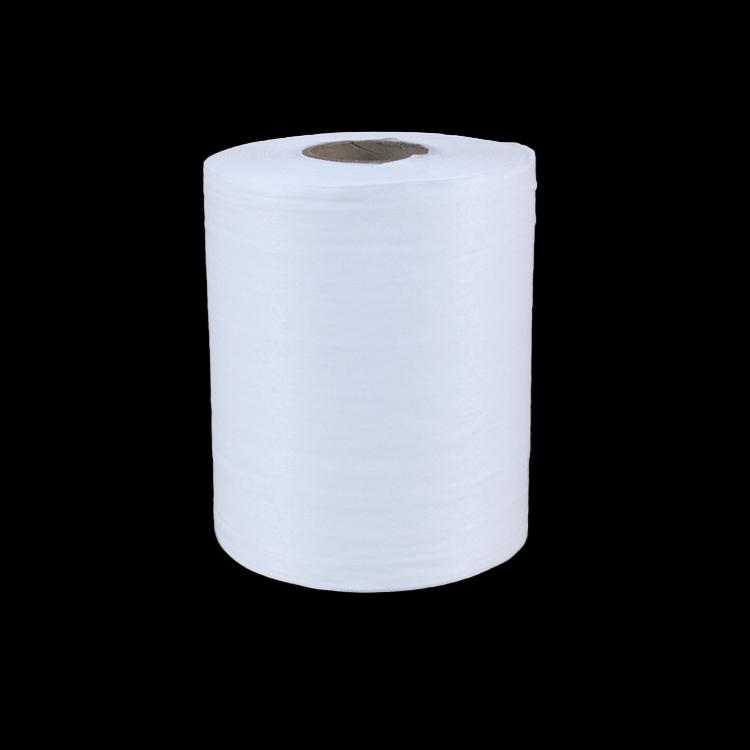
Roll stability refers to the consistency of a material roll's winding, shape, and physical condition during storage, transportation, and production.
For diaper manufacturers, unstable rolls may create material-handling difficulties, affect web alignment, or interrupt converting operations.
Roll diameter and core dimensions determine whether the material can be handled and mounted according to the production line's requirements.
Buyers should confirm:
During incoming inspection, buyers should examine the roll for visible defects that may affect material handling or converting.
| Inspection Item | What to Check | Why It Matters |
|---|---|---|
| Roll Tightness | Consistent winding without obvious loose or uneven sections | Supports stable unwinding |
| Roll Edges | Aligned edges without excessive telescoping | Helps maintain web alignment |
| Roll Surface | No obvious wrinkles, contamination, or damage | Reduces material handling concerns |
| Core Condition | Core is intact and suitable for mounting | Supports proper installation and unwinding |
| Splices | Splice quantity, position, and marking meet agreed requirements | Helps operators manage roll changes |
A roll may appear acceptable during visual inspection but still behave differently during production.
When introducing a new SAP paper specification, manufacturers should evaluate unwinding behavior under the intended operating conditions.
Relevant observations include web tension consistency, material tracking and alignment, occurrence of tearing or web breaks, behavior around material splices, and changes in material appearance during continuous production.
SAP paper should be stored and transported according to the supplier's material-specific recommendations.
Buyers should check packaging integrity, protection against moisture and contamination, and whether the material has been exposed to conditions outside its recommended storage range.
A complete technical data sheet should provide sufficient information to identify the material and evaluate its suitability for the intended application.
| Specification | Information to Request |
|---|---|
| Material Identity | Product name, material composition, and intended application |
| Basis Weight | Nominal GSM, tolerance, and test method |
| SAP Content | Applicable SAP loading or composition information |
| Physical Properties | Thickness, tensile strength, and other relevant parameters |
| Absorption Properties | Test method, test liquid, conditions, and reported results |
| Roll Specifications | Width, diameter, core size, net weight, and splice requirements |
| Quality Control | Inspection criteria and available batch records |
Sample evaluation helps manufacturers confirm whether the material matches the agreed specification and performs appropriately in the intended application.
For ongoing supply, buyers should evaluate not only whether one sample meets the specification but also whether the supplier can maintain consistency across production lots.
Useful quality records may include batch identification and traceability, basis-weight inspection results, relevant physical-property test results, roll dimension and appearance inspection, and documentation of nonconforming material and corrective actions.
Before comparing suppliers, define the diaper type, absorbent-core design, target material function, and expected production conditions.
These requirements provide the basis for evaluating whether a particular SAP paper specification is appropriate.
Supplier quotations should be compared using consistent material definitions and commercial conditions.
SAP Paper Procurement Checklist
The purchase price of SAP paper is only one part of material cost.
Manufacturers should also consider material consumption, roll dimensions, converting efficiency, quality consistency, and any additional materials required by the absorbent-core design.
A meaningful comparison should use the same material composition, GSM basis, roll specification, and commercial conditions.
For long-term procurement, a supplier should be able to provide clear material specifications, explain the product's intended application, and support sample evaluation and quality communication.
JUHUA's SAP Paper and related absorbent-core material range can be reviewed as part of the material sourcing process. Buyers should confirm the exact product composition, applicable specifications, and technical documentation before selecting a material for production.
No. SAP is the superabsorbent polymer itself, while SAP paper refers to a paper-based material structure that contains SAP or is designed for SAP integration. The exact composition should be confirmed from the product specification.
No. Higher GSM means greater material mass per unit area, but it does not automatically indicate better absorption or finished-diaper performance. Composition, SAP content, fiber structure, and test conditions must also be considered.
Whether SAP paper can replace carrier tissue depends on the absorbent-core design and the functions required from each material. The two materials have different typical roles and should not be treated as interchangeable without technical evaluation.
There is no single specification that applies to every production line. Roll width, diameter, core size, winding quality, and material handling requirements should be checked together against the intended converting conditions.
Buyers should review the technical data sheet, confirm the material composition and GSM tolerance, inspect sample rolls, conduct relevant tests, and evaluate the material in the intended absorbent-core design before approving bulk purchasing.
Selecting SAP paper for disposable diapers requires a clear understanding of its position within the absorbent core, its GSM specification, and its physical stability as a roll material.
For B2B buyers, the most reliable approach is to define the intended application first, compare materials using consistent specifications, verify relevant technical data, and evaluate sample performance under actual production conditions.
A well-defined material specification and a consistent quality evaluation process help manufacturers make more informed sourcing decisions and reduce uncertainty when introducing new SAP paper materials.

 MP/WhatsApp: +86-18050806553
 Manufacturer Address:Juhua Industry Matou Town, Nanan City Fujian Province China