

Hot Keyword:
Author:Baby & Adult Diaper Materials FROM:Diaper Materials Manufacturer TIME:2026-10-29
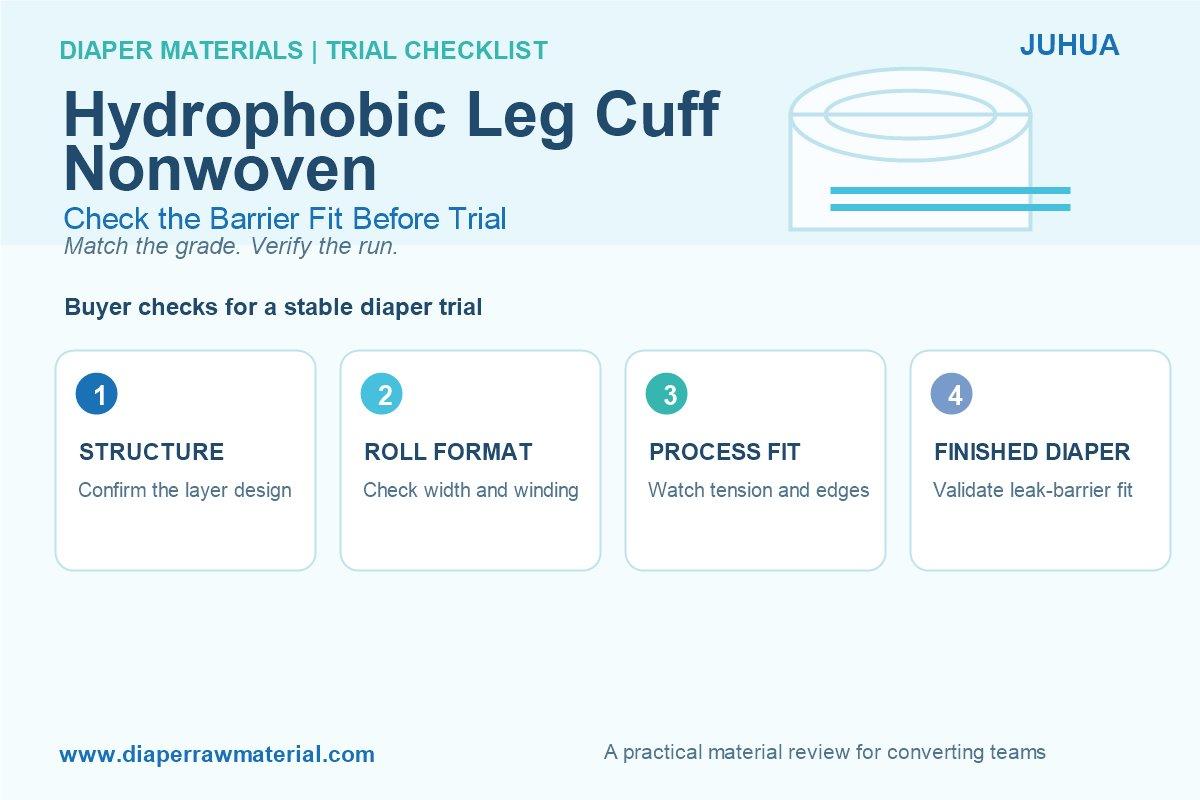
Short answer: a hydrophobic leg cuff nonwoven should be evaluated as part of a finished diaper system, not as an isolated “waterproof” sheet. Before a trial, buyers should match the offered grade to the cuff structure, confirm roll width and winding, review hydrophobic treatment and basis-weight data, check edge and tension behavior on the line, and record finished-diaper leakage evidence separately from material inspection. That sequence helps a converter tell whether a result comes from the nonwoven, bonding, elastic recovery, cuff geometry, or another component.
Leg cuffs are small, but they sit at a demanding interface. The material has to move with the elastic, maintain a useful barrier contribution, bond cleanly to neighboring layers, and arrive in a roll format that the converting line can run consistently. A catalog label such as “hydrophobic nonwoven for leg cuff” is therefore a starting point, not a complete specification. The practical question is: does this exact grade, in this exact construction and roll format, fit the intended diaper trial?
A leg cuff nonwoven commonly acts as a soft, breathable-facing barrier layer around the leg opening. It is not the only part that controls leakage. The cuff profile, elastic placement, adhesive pattern, bonding window, topsheet, backsheet, absorbent core, and the way the finished product is folded all influence the final result. This is why a material that looks suitably water-repellent in a bench check can still show leakage after converting, or why a material with similar nominal data can run differently on a second line.
For procurement, the first requirement is a clear use statement. Record whether the material is intended for a standing leg cuff, a gathered cuff, a double-cuff construction, or another design. Also record the adjacent layers and the expected line speed. Without that context, “hydrophobic” can be interpreted too broadly and a sample may be judged against the wrong job.
Hydrophobic treatment is useful when the cuff needs to slow liquid movement through the web, but treatment level is only one variable. Fiber type, web structure, pore distribution, basis weight, surface finish, calendering, and any later adhesive or thermal exposure can change how the material behaves. A buyer should ask for the grade-specific TDS and the supplier’s description of the intended application rather than relying on a generic “waterproof” phrase.
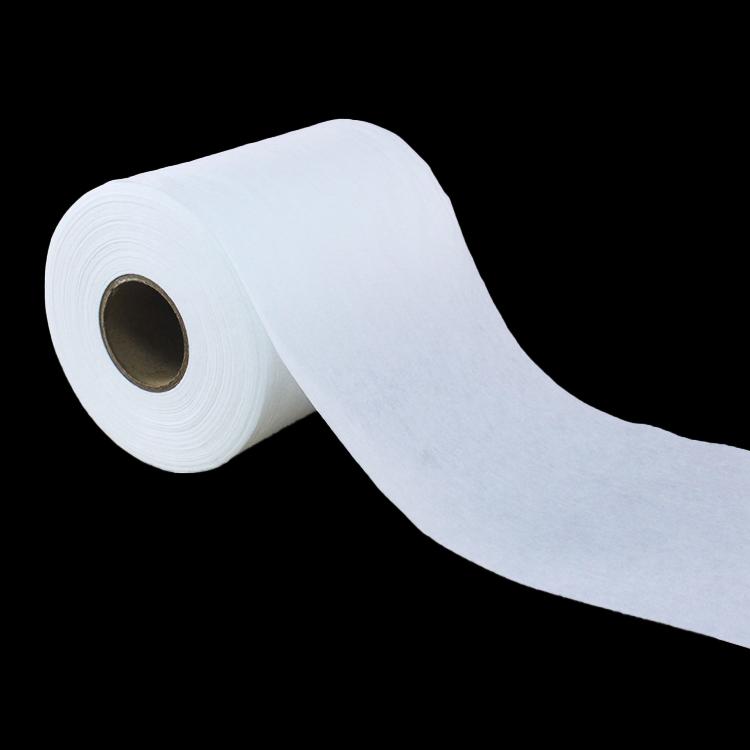
The JUHUA product page for spunbond hydrophobic nonwoven for baby diaper leg cuff making presents a leg-cuff application and a SMMS-style material description. Treat the page as an application reference, then confirm the exact offered grade, construction, color, width, and current TDS before approving a trial lot.
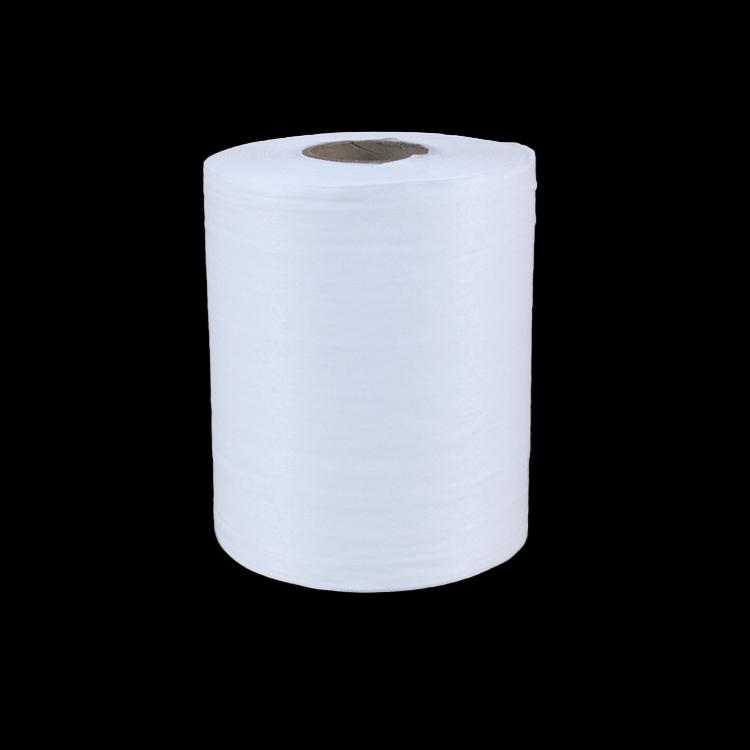
Roll format is often where a promising sample becomes a difficult production trial. Confirm finished width, usable width, roll diameter, core size, winding direction, splice policy, roll-to-roll variation, packaging, and identification marks. If the cuff is slit from a wider master roll, ask how slit edges are controlled and whether the sample represents the same slit condition that will be delivered.
Pay attention to the relationship between width and web tension. A roll can be within the nominal width yet still create tracking or edge-curl problems if winding hardness is uneven. Photograph the received roll labels and record the lot number before opening. If the material will be stored before the trial, document temperature, humidity, pallet condition, and the time between receipt and line start.


Incoming inspection should answer whether the delivered roll matches the approved sample. It can include visual cleanliness, color, odor, surface uniformity, width, basis weight, roll build, core condition, splices, edge damage, and a simple liquid-interaction screen. These checks are valuable because they establish a baseline, but they should not be written as a promise that the finished diaper will pass a leakage test.
For a material screen, define the method before testing. Use the same liquid volume, contact time, sample orientation, room condition, and observation language for every lot. “Repelled quickly,” “slow wetting,” and “through-wet observed” are useful observations when the method is controlled; they are not interchangeable with a universal hydrostatic-pressure or leakage rating.
| Review area | What to record | Why it matters | Decision if missing |
|---|---|---|---|
| Structure | Layer description, fiber/web type, treatment statement, grade code | Confirms that the sample and production material are comparable | Hold approval until the supplier identifies the exact grade |
| Roll format | Usable width, core, diameter, winding, splice and edge condition | Determines whether the line can feed and slit the web consistently | Run a controlled setup check before a full trial |
| Incoming quality | Lot, basis-weight result, appearance, odor, roll photos and storage record | Creates traceability when trial results vary | Quarantine or re-sample the lot |
| Process fit | Line speed, tension, adhesive/thermal window, edge behavior, rejects | Separates converting issues from material issues | Repeat with one variable changed at a time |
| Finished diaper | Cuff geometry, elastic recovery, wetting path, leakage observation and sample size | Shows the real system result without over-crediting one component | Do not make a material pass/fail decision from appearance alone |
During setup, look at the points where the web meets another process. These include the unwind, guide rollers, slitter, elastic application, adhesive spray or slot, ultrasonic or thermal bond, folding unit, and cut-off. A hydrophobic web may be suitable in the product design but still require a different adhesive amount, temperature, pressure, or dwell time than a hydrophilic facing.
Start with a short controlled run. Keep the cuff pattern, elastic, adhesive, line speed, and operator settings fixed while you establish a baseline. Watch for telescoping, wrinkles, edge fray, web wandering, tension spikes, exposed adhesive, incomplete bonding, and loss of elastic recovery after the diaper is relaxed. Capture both the roll lot and the line settings in the same trial record.
A practical plan has three layers. First, identity checks confirm the supplier, grade, color, lot, width, and packaging. Second, physical checks compare a retained sample with the approved reference. Third, a defined liquid-interaction screen checks whether the surface behavior is directionally consistent with the intended use. None of these layers should be silently replaced by a visual glance at the roll.
Define a sample plan that your team can repeat. For example, take samples from the beginning, middle, and end of a roll when feasible, and retain a labeled piece from every trial lot. If the material has a face/back orientation, label it during sampling. A small amount of discipline here prevents a common mistake: comparing a production-side sample with a lab-side sample without realizing that orientation changed.
Trial evidence is strongest when it combines photos, settings, observations, and finished-product checks. Photograph the roll label, the web at the slitter, the elasticized cuff, the bond area, and any reject pattern. Note whether the cuff was opened, folded, compressed, or stored before the finished-diaper check. Use a consistent sample count and test sequence for repeatability.
When a leak or wet-through appears, mark its position relative to the cuff, bond, topsheet, core, or backsheet. A red mark on a finished diaper is more useful when paired with the process station and the material lot. If the defect is intermittent, compare accepted and rejected pieces from the same time window rather than assuming that the entire roll is unsuitable.
Start with the simplest split: did the nonwoven fail the incoming screen, or did the finished diaper fail after the web passed incoming checks? If incoming behavior is normal, review the cuff profile, elastic gathering, bond continuity, adhesive placement, line tension, folding, and adjacent-layer alignment. If the issue follows a roll splice or a particular slit lane, inspect the roll and slitting record before changing the whole formulation.
A useful troubleshooting sequence is to change one variable at a time: hold the material constant and adjust the process, then hold the process constant and compare the approved reference with the trial grade. This approach avoids blaming hydrophobicity for a geometry or bonding problem, and it gives the supplier actionable evidence instead of a general complaint that “the material leaked.”
No. Hydrophobic behavior describes how a surface or web interacts with liquid under a defined observation. “Waterproof” is a much stronger conclusion and can be misleading for a breathable cuff material. Ask for the grade-specific test method and evaluate the finished diaper construction separately.
Request the grade code, layer or web description, basis-weight range, usable width, roll and core information, treatment statement, color options, splice policy, storage guidance, current TDS, and a clear statement of the intended diaper application. Provide your cuff design and line constraints so the supplier can recommend a relevant sample.
No. Basis weight is useful, but it does not describe pore structure, stiffness, surface finish, tensile behavior, treatment uniformity, roll winding, or converting response. Compare the complete data set and run both materials through the same controlled setup.
Incoming checks may not reveal tension sensitivity, edge curl, slitting variation, adhesive compatibility, thermal sensitivity, or elastic recovery after bonding. The line trial exposes these interfaces, which is why process settings and defect location should be recorded with the material lot.
Approve a material for a defined construction and process window, not for every diaper design. State the approved grade, roll format, incoming checks, trial settings, finished-product evidence, and requalification triggers. A change in treatment, web structure, width, or converting method should reopen the review.
Hydrophobic leg cuff nonwoven is best purchased as a controlled system input. Buyers who verify the offered structure, roll format, incoming behavior, converting interfaces, and finished-diaper evidence can make a faster and fairer decision than buyers who rely on one label or one drop test. The most useful trial brief is specific: define the cuff design, request the exact grade data, document the roll, control the line, and record where any defect occurs. That is the path from a promising sample to a repeatable diaper production result.
For the next evaluation, prepare a one-page checklist using the fields above and send the supplier the intended construction before sampling. It will make technical review, commercial comparison, and follow-up troubleshooting much easier for both teams.

 MP/WhatsApp: +86-18050806553
 Manufacturer Address:Juhua Industry Matou Town, Nanan City Fujian Province China