

Hot Keyword:
Author:Baby & Adult Diaper Materials FROM:Diaper Materials Manufacturer TIME:2026-08-06
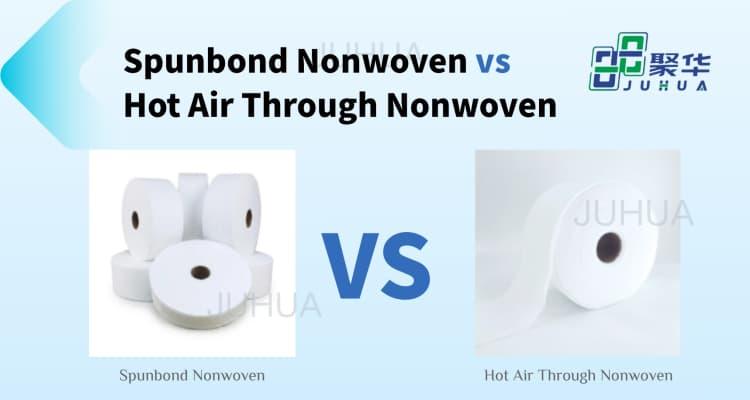
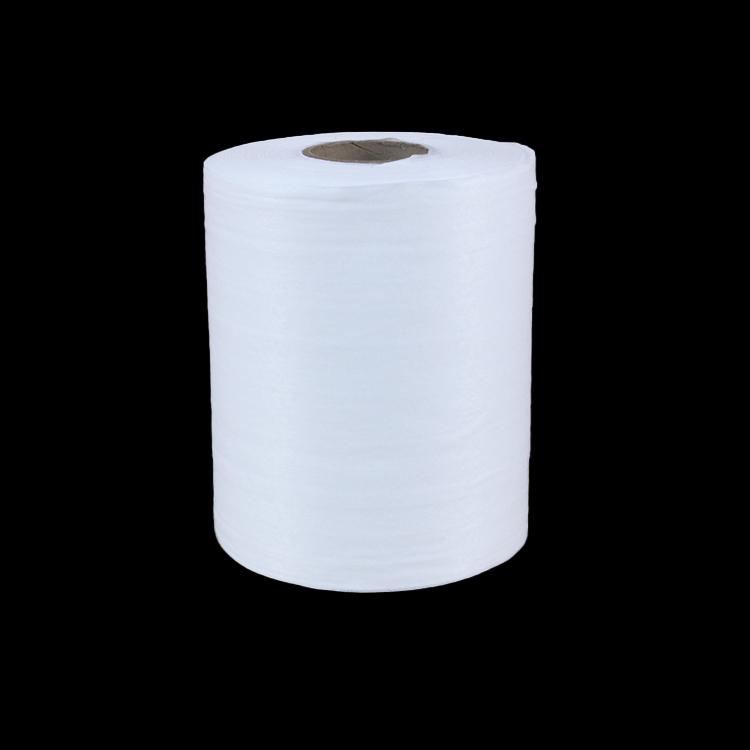
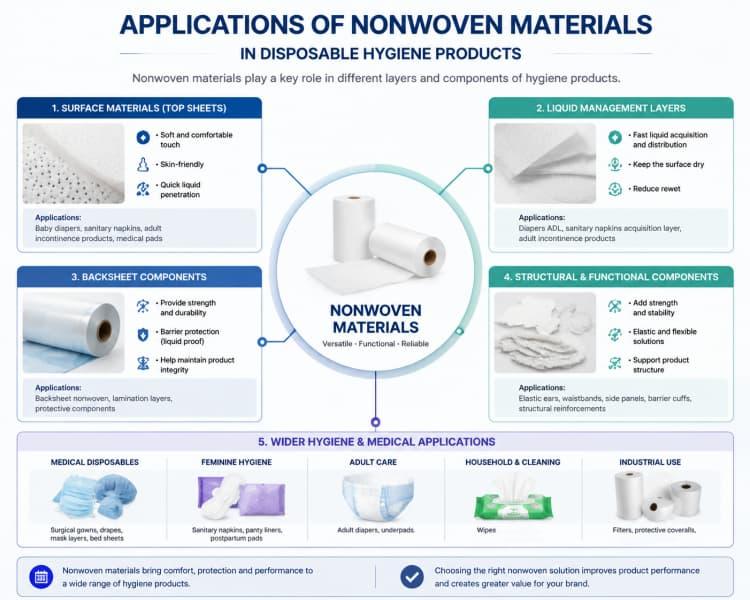
Nonwoven fabrics are among the most important raw materials used in disposable hygiene products.
Unlike traditional woven fabrics, nonwoven materials are produced by bonding fibers together through mechanical, thermal, or chemical processes.
Because of their unique properties, nonwoven fabrics are widely used in:
· Baby diapers
· Sanitary products
· Adult incontinence products
· Medical and hygiene applications
For hygiene manufacturers, choosing the right nonwoven material directly affects:
· Softness
· Liquid absorption performance
· Strength
· Breathability
· User comfort
Among different nonwoven technologies, spunbond nonwoven and hot air through nonwoven are two commonly used materials.
Understanding their differences helps buyers select the right solution for different applications.
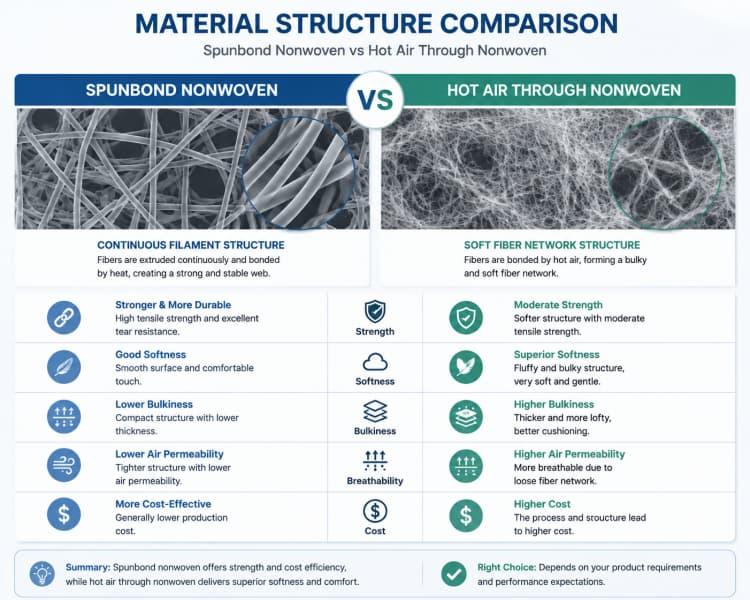
Spunbond nonwoven is produced by extruding melted polymer fibers, mainly polypropylene (PP), into continuous filaments and bonding them together through heat.
The manufacturing process creates a material with:
· High strength
· Good uniformity
· Stable structure
· Cost efficiency
Spunbond materials provide excellent tensile strength, making them suitable for applications requiring durability.
The stable structure allows manufacturers to easily process and convert the material.
Compared with softer nonwoven technologies, spunbond usually offers better cost efficiency.
Hot air through nonwoven (also called thermal bonded nonwoven) is produced by bonding fibers with heated air.
The process creates a softer and more flexible fiber structure.
Compared with traditional spunbond materials, hot air through nonwoven provides:
· Higher softness
· Better flexibility
· Improved comfort
The fluffy fiber structure creates a soft touch, making it suitable for applications requiring skin comfort.
The material has a thicker and softer structure.
Hot air through nonwoven is often selected for premium hygiene products.
|
Feature |
Spunbond Nonwoven |
Hot Air Through Nonwoven |
|
Fiber Structure |
Continuous filaments |
Soft fiber network |
|
Softness |
Good |
Excellent |
|
Strength |
Higher |
Moderate |
|
Thickness |
Lower |
Higher |
|
Cost |
More economical |
Higher |
|
Comfort |
Good |
Premium |
|
Processing Stability |
Excellent |
Good |
Different hygiene applications require different material characteristics.
Commonly used where strength and cost efficiency are important.
Advantages:
· Reliable performance
· Stable supply
· Competitive pricing
Used when softness and premium comfort are priorities.
Advantages:
· Soft skin contact
· Better product experience
· High-end positioning
The final material choice depends on product requirements, market positioning, and cost targets.
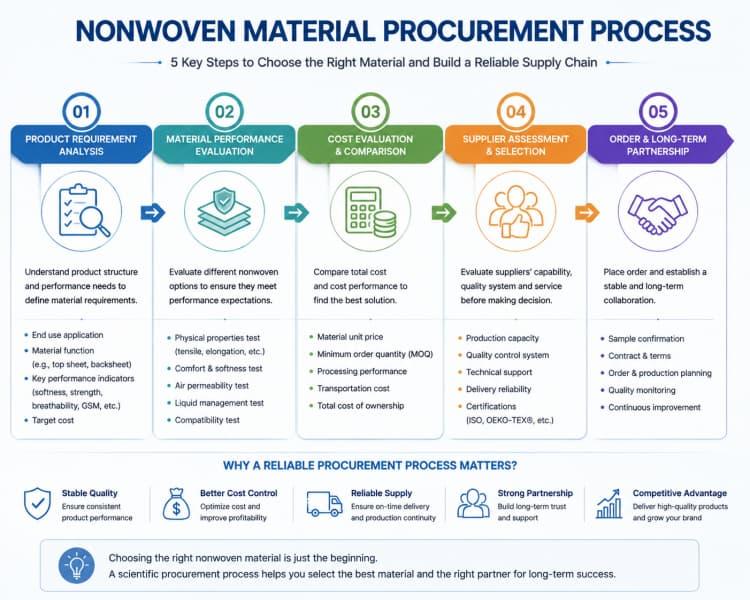
When selecting nonwoven materials, buyers should consider several factors.
5.1. Product RequirementsDifferent applications require different properties:
· Softness
· Strength
· Breathability
· Liquid management
5.2. Quality ConsistencyA reliable supplier should provide:
· Stable raw materials
· Consistent production standards
· Batch-to-batch quality control
5.3. Cost PerformanceThe best material is not always the most expensive one.
Manufacturers need to balance:
· Performance
· Product positioning
· Production cost
5.4. Supplier CapabilityA professional nonwoven supplier should provide:
· Technical support
· Customized specifications
· Reliable delivery
Nonwoven materials influence the overall performance of disposable hygiene products.
A suitable material combination helps manufacturers achieve:
· Better product quality
· Improved customer satisfaction
· Stable production
· Competitive market positioning
For global hygiene manufacturers, choosing the right raw material partner is an important part of product development.
Spunbond nonwoven and hot air through nonwoven both play important roles in disposable hygiene material solutions.
Spunbond nonwoven provides:
· Strength
· Stability
· Cost efficiency
Hot air through nonwoven provides:
· Superior softness
· Better comfort
· Premium performance
The right choice depends on product requirements, market positioning, and performance expectations.
Working with an experienced hygiene raw material supplier helps manufacturers select suitable nonwoven solutions and build reliable supply chains.

 MP/WhatsApp: +86-18050806553
 Manufacturer Address:Juhua Industry Matou Town, Nanan City Fujian Province China