

Hot Keyword:
Author:Baby & Adult Diaper Materials FROM:Diaper Materials Manufacturer TIME:2026-08-06
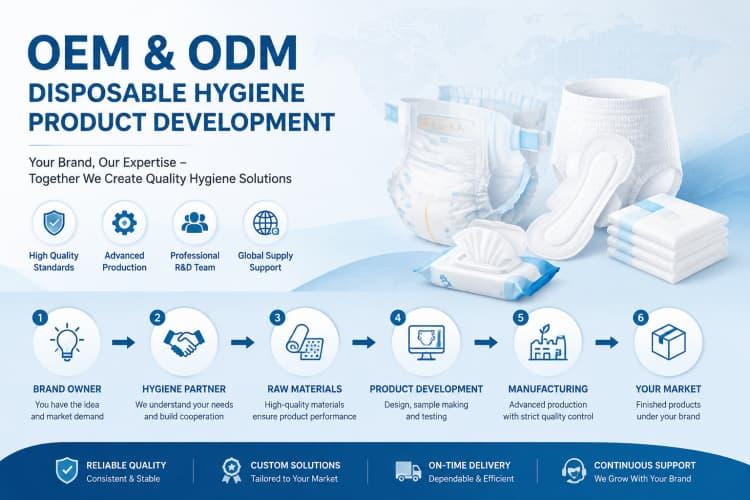
The disposable hygiene industry continues to grow worldwide, creating opportunities for new brands in markets such as baby diapers, sanitary napkins, adult incontinence products, and wet wipes.
However, many companies want to launch their own hygiene brands without investing in production facilities.
Building a factory requires significant investment in:
· Manufacturing equipment
· Production management
· Quality control systems
· Raw material sourcing
· Technical expertise
Because of this, many brands choose to work with professional partners through OEM or ODM manufacturing models.
Understanding the difference between OEM and ODM helps brands choose the right cooperation method and develop competitive hygiene products more efficiently.
OEM stands for Original Equipment Manufacturer.
Under an OEM model, the customer provides the product concept, specifications, or brand requirements, and the manufacturer produces the product according to these requirements.
For disposable hygiene products, OEM cooperation may include:
· Baby diapers
· Adult incontinence products
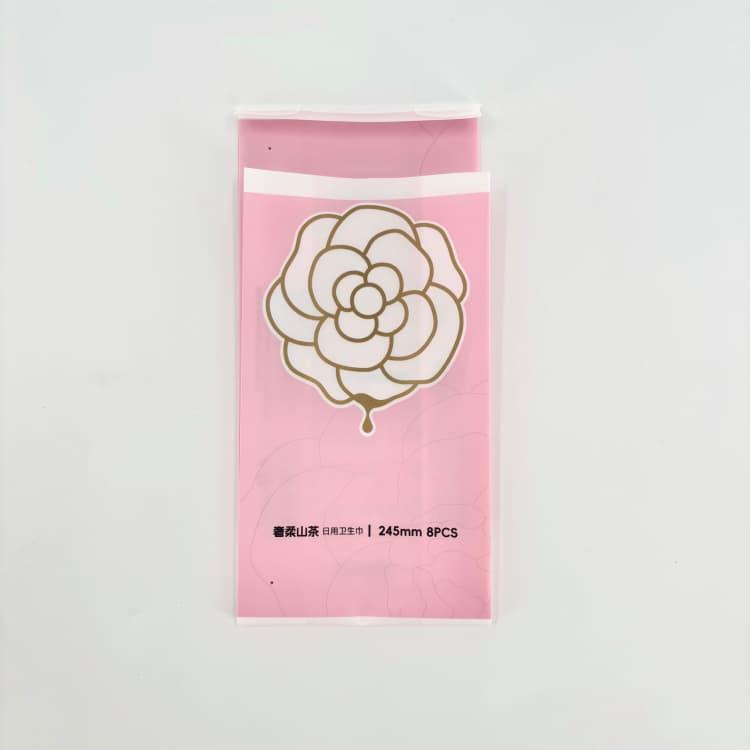
· Sanitary napkins
· Nursing pads
· Wet wipes
The brand owner usually controls:
· Product design
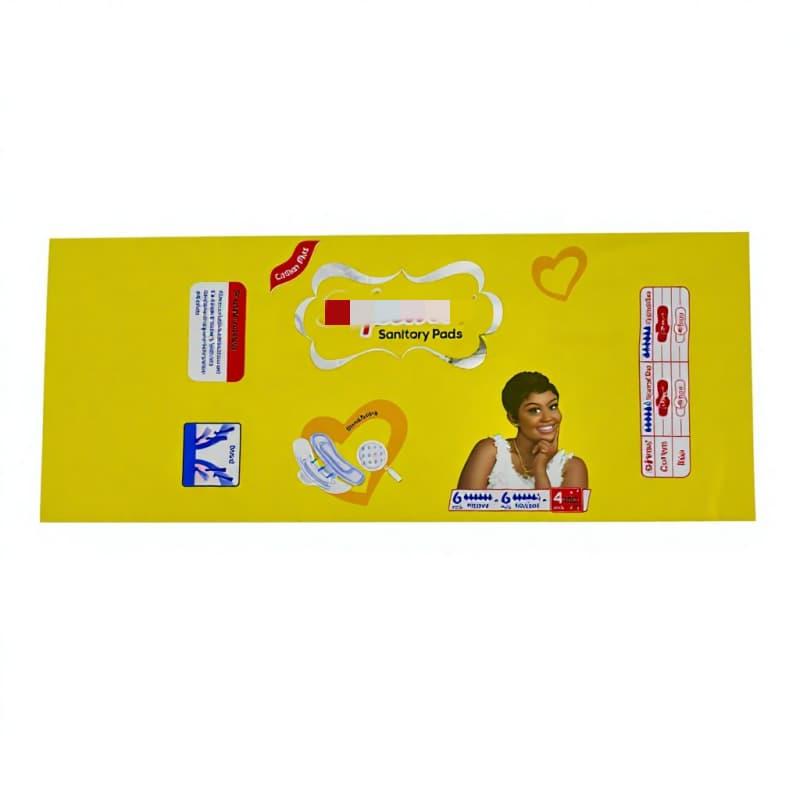
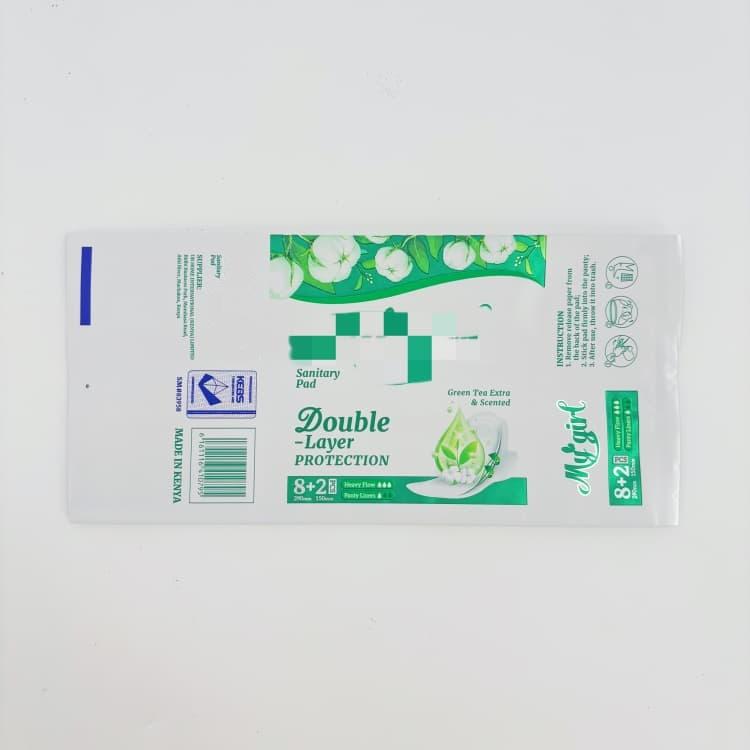
· Packaging design
· Brand positioning
· Target market requirements
The manufacturing partner is responsible for:
· Production
· Quality control
· Material processing
· Delivery
A hygiene brand wants to launch a premium baby diaper line.
They provide:
· Product specifications
· Size requirements
· Packaging design
· Performance targets
The manufacturer produces the diapers according to the brand’s requirements.
ODM stands for Original Design Manufacturer.
Unlike OEM, ODM suppliers provide more product development support.
The manufacturer can help with:
· Product design
· Material selection
· Performance optimization
· Prototype development
This model is suitable for companies that have a brand idea but lack technical knowledge about hygiene products.
A new company wants to create its own diaper brand but does not know:
· Which absorbent materials to use
· How to design the absorbent core
· Which nonwoven materials provide better softness
An ODM partner can provide professional recommendations and develop a suitable product solution.
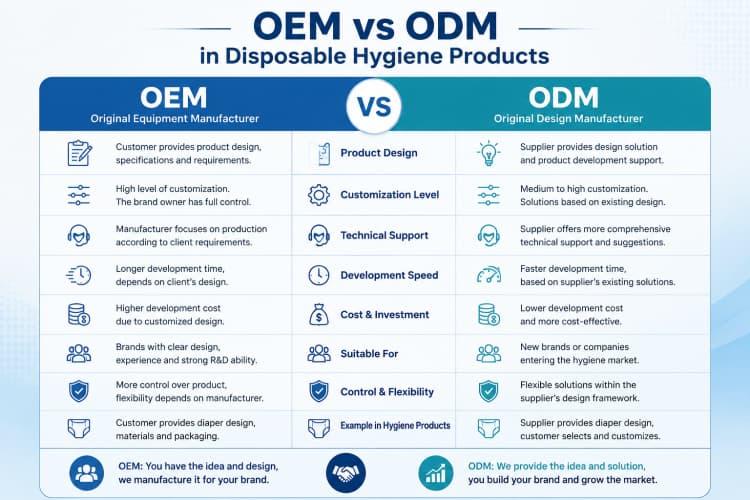
|
|
OEM |
ODM |
|
Product design |
Customer provides design |
Supplier provides design support |
|
Customization level |
High |
Medium to high |
|
Technical support |
Limited |
More comprehensive |
|
Development speed |
Slower |
Faster |
|
Suitable for |
Experienced brands |
New brands |
|
Product innovation |
Customer-driven |
Supplier-supported |
The best choice depends on the brand’s experience, resources, and goals.
Companies that already have:
· Product specifications
· Technical knowledge
· Existing designs
· Market experience
OEM provides greater control over product development.
New companies that:
· Are entering the hygiene market
· Need technical guidance
· Want faster product launch
· Do not have manufacturing experience
ODM reduces the difficulty of creating a new hygiene product.
High-quality raw materials are the foundation of disposable hygiene products.
A reliable hygiene material partner can support product development through:
Different products require different material combinations.
Examples:
Baby diapers:
· SAP
· Fluff pulp
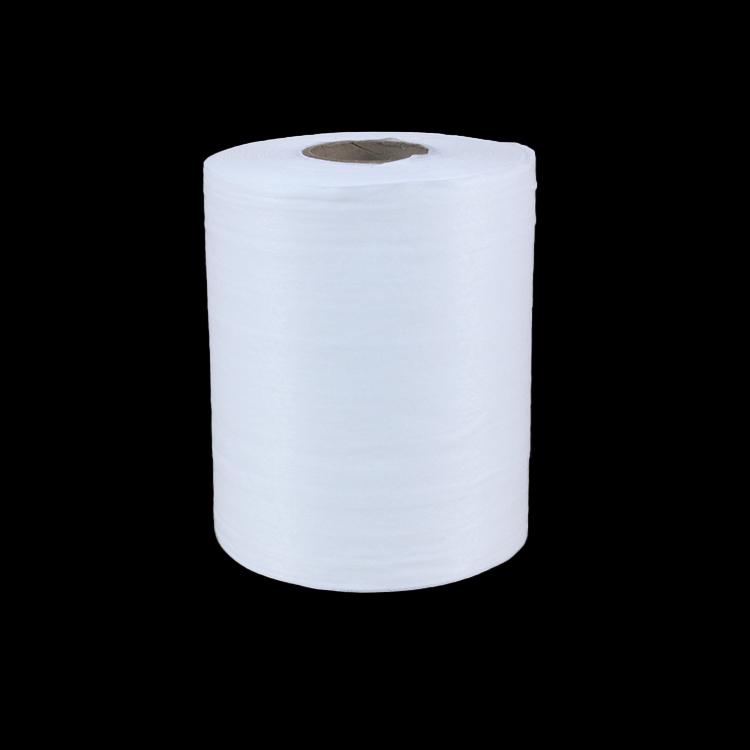
· Nonwoven
· ADL
· PE film
Sanitary products:
· Nonwoven
· Absorbent materials
· Release paper
· Back sheet materials
Material selection affects:
· Absorption speed
· Dryness
· Softness
· Breathability
· Comfort
Professional suppliers can recommend suitable materials based on product positioning.
Reliable raw material supply helps manufacturers maintain:
· Consistent quality
· Stable production
· Competitive costs
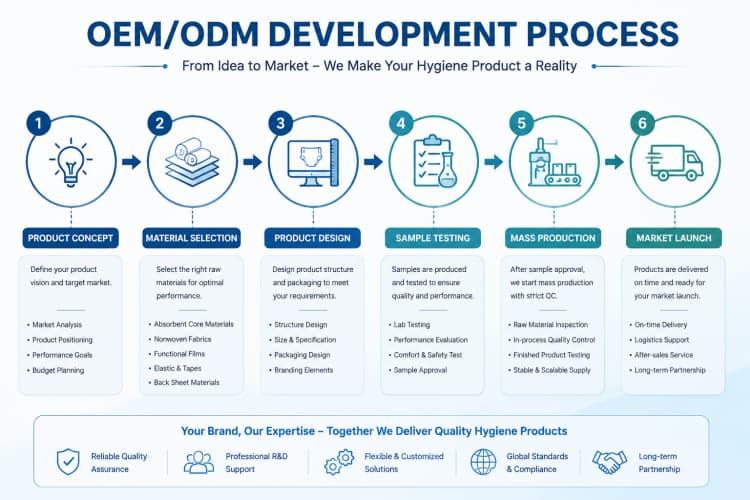
A typical disposable hygiene product development process includes:
Define:
· Target market
· Product type
· Consumer requirements
↓
Choose:
· Absorbent materials
· Nonwoven fabrics
· Functional components
↓
Develop:
· Product structure
· Performance requirements
· Packaging concept
↓
Evaluate:
· Absorption performance
· Comfort
· Quality stability
↓
Begin commercial production after approval.
↓
Products are introduced under the brand owner’s name.
Partnering with an experienced supplier provides several advantages:
Brands do not need to build factories or purchase expensive equipment.
Professional partners can shorten product development time.
Experienced suppliers understand:
· Materials
· Product structures
· Manufacturing processes
Brands can create customized products based on their market needs.
OEM and ODM models provide effective solutions for companies entering the disposable hygiene industry.
OEM is suitable for brands with clear product requirements, while ODM is ideal for companies looking for professional product development support.
By working with an experienced hygiene partner, brands can reduce investment risks, improve product quality, and launch competitive products faster.
For companies planning to develop baby diapers, sanitary products, adult care products, or other disposable hygiene products, choosing the right cooperation model is an important first step.

 MP/WhatsApp: +86-18050806553
 Manufacturer Address:Juhua Industry Matou Town, Nanan City Fujian Province China