

Hot Keyword:
Author:Baby & Adult Diaper Materials FROM:Diaper Materials Manufacturer TIME:2026-06-26
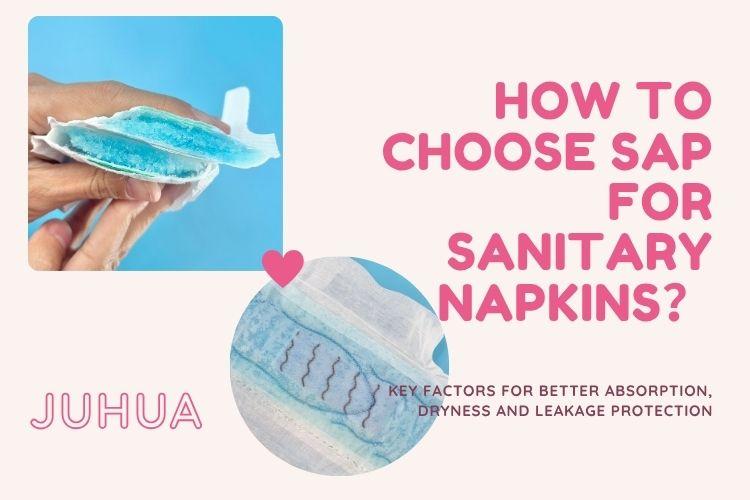
Super Absorbent Polymer (SAP) is one of the most important raw materials in modern sanitary napkins. It directly affects absorption performance, dryness, leakage protection, and user comfort.
For manufacturers, OEM factories, and private label brands, selecting the right SAP is not just a technical decision—it is a product performance and cost strategy decision.
Poor SAP selection can lead to high rewet, leakage issues, and unstable product performance. High-quality SAP helps create thinner, more comfortable, and higher-performance sanitary napkins.
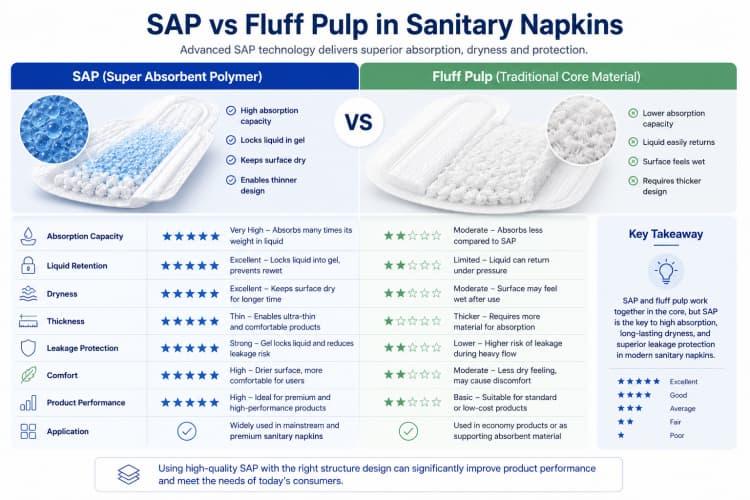
SAP (Super Absorbent Polymer) is a functional material that can absorb and lock liquid many times its own weight.
Once liquid enters the absorbent core, SAP transforms it into a gel structure, preventing it from flowing back to the surface.
SAP is widely used in:
· Sanitary napkins
· Panty liners
· Baby diapers
· Adult incontinence products
It is the core material responsible for long-lasting dryness.
Choosing SAP requires evaluating multiple performance indicators, not just price.
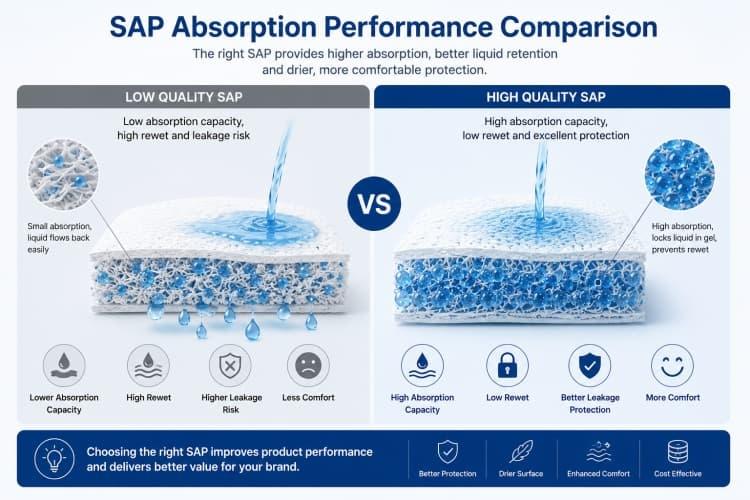
Absorption capacity determines how much liquid SAP can hold.
Higher absorption capacity means:
· Better fluid handling
· Longer protection time
· Improved performance for heavy flow products
However, extremely high absorption SAP may increase cost, so balance is important.
Rewet refers to how much liquid returns to the surface after absorption.
Low rewet SAP provides:
· Better surface dryness
· Improved comfort
· Reduced skin irritation risk
For sanitary napkins, rewet performance is critical for user experience.
After absorbing liquid, SAP forms a gel structure.
Strong gel strength ensures:
· Better leakage protection under pressure
· Stable structure during movement
· Reduced breakdown of absorbent core
This is especially important for overnight and high-flow products.
SAP particle size affects how evenly liquid is distributed inside the core.
Proper particle distribution helps:
· Faster liquid diffusion
· Better core efficiency
· Reduced localized saturation
Uniform distribution improves overall product stability.
Different product types require different SAP performance levels.
Daily sanitary napkins
· Balanced absorption and comfort
· Medium SAP level
Overnight pads
· High absorption capacity
· Strong gel strength
· Low rewet requirement
Ultra-thin sanitary napkins
· High SAP efficiency
· Low fluff pulp usage
· High performance SAP required
Understanding application scenarios is key to correct SAP selection.
Many buyers make avoidable mistakes when selecting SAP:
· Choosing SAP only based on lowest price
· Ignoring rewet performance
· Not testing SAP in real core structure
· Mixing inconsistent suppliers
· Overlooking batch stability
These mistakes often lead to unstable product quality and customer complaints.
A sanitary napkin manufacturer supplying private-label brands in Europe faced issues with high rewet and inconsistent absorption performance.
After switching to a higher-quality SAP with better gel strength and absorption stability:
· Rewet levels decreased significantly
· Product dryness improved
· Leakage complaints reduced
· Customer satisfaction increased
This improvement allowed the brand to move into a more premium market segment.
SAP selection plays a critical role in sanitary napkin performance. The right SAP improves absorption, reduces leakage, and enhances comfort.
For manufacturers and brand owners, working with a stable and experienced raw material supplier ensures:
· Consistent product quality
· Better production stability
· Optimized cost-performance balance
A well-chosen SAP is not just a material—it is a key factor in product success.
If you are looking for a reliable SAP supplier for sanitary napkins, we can provide:
· Stable SAP supply
· Technical data and testing support
· Customized material solutions
· Competitive pricing for bulk orders
Contact us to get samples and technical recommendations.

 MP/WhatsApp: +86-18050806553
 Manufacturer Address:Juhua Industry Matou Town, Nanan City Fujian Province China