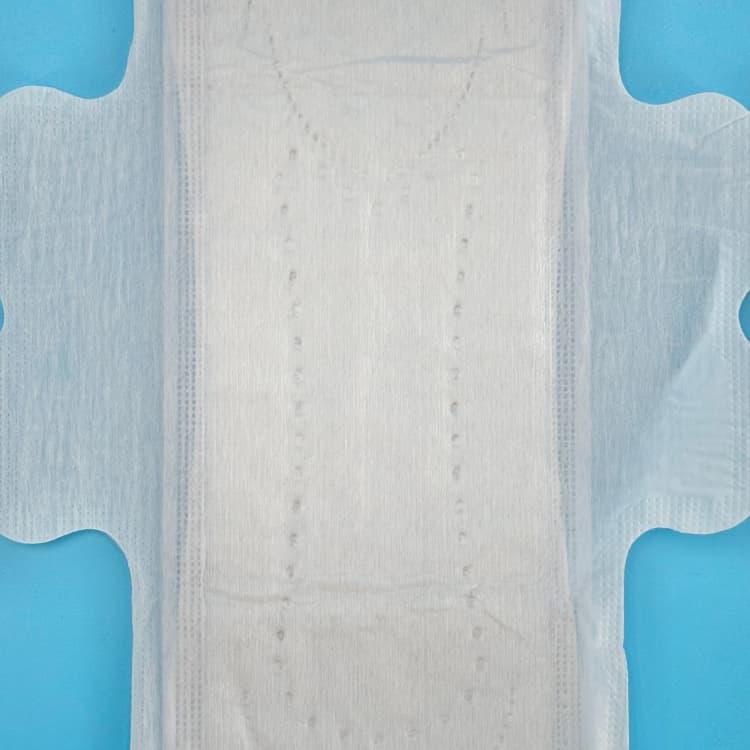
For manufacturers of disposable sanitary pads (B-end clients), the top layer raw material is a core factor affecting product competitiveness, production efficiency, and compliance. As a key contact layer between the product and users, the top layer not only determines the basic performance of the product (such as liquid penetration rate, anti-reflux, and breathability) but also relates to the compliance of raw materials and the brand’s market positioning. This document focuses on the differences between organic cotton top layer raw materials and conventional top layer raw materials, and clarifies the supply advantages of organic cotton top layer for B-end manufacturers.
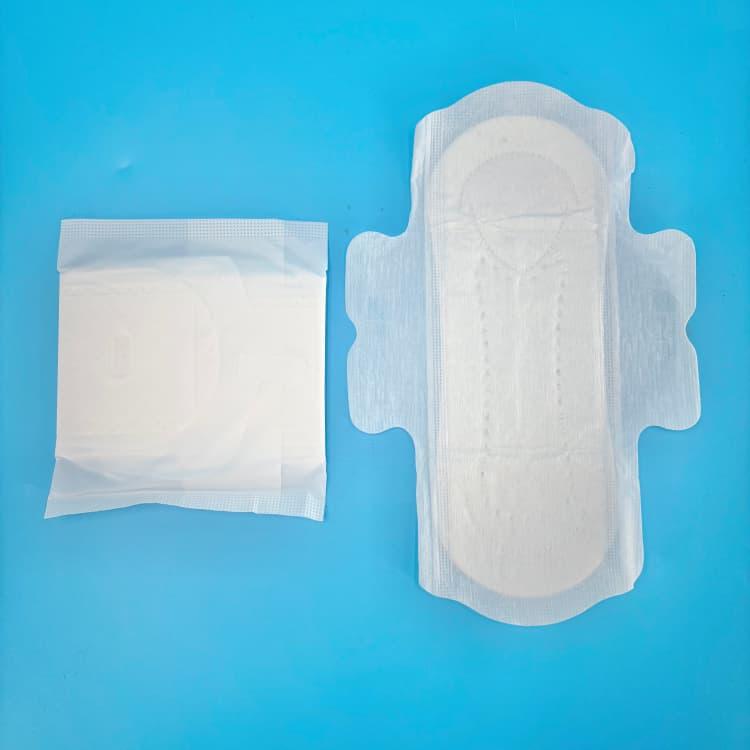
1. Core Demand for Top Layer Raw Materials from B-end Perspective
B-end manufacturers have clear core demands for sanitary pad top layer raw materials: first, compliance (meeting national and international environmental and safety standards for medical and daily chemical raw materials); second, processability (adapting to automated production lines, easy compounding with absorbent cores, and low defective rate); third, performance stability (stable penetration, anti-reflux, and breathability in batch production); fourth, cost-effectiveness (matching supply volume, price stability, and supporting customized processing). Among them, organic cotton top layer raw materials have gradually become the preferred choice for medium and high-end product lines due to their compliance and performance advantages.
2. Key Differences Between Organic Cotton Top Layer and Conventional Top Layer Raw Materials
The core gap between organic cotton top layer and conventional top layer raw materials lies in the raw material base, processing technology, and batch stability—all of which directly affect the production efficiency of B-end manufacturers and the market acceptance of finished products. The specific differences are as follows:
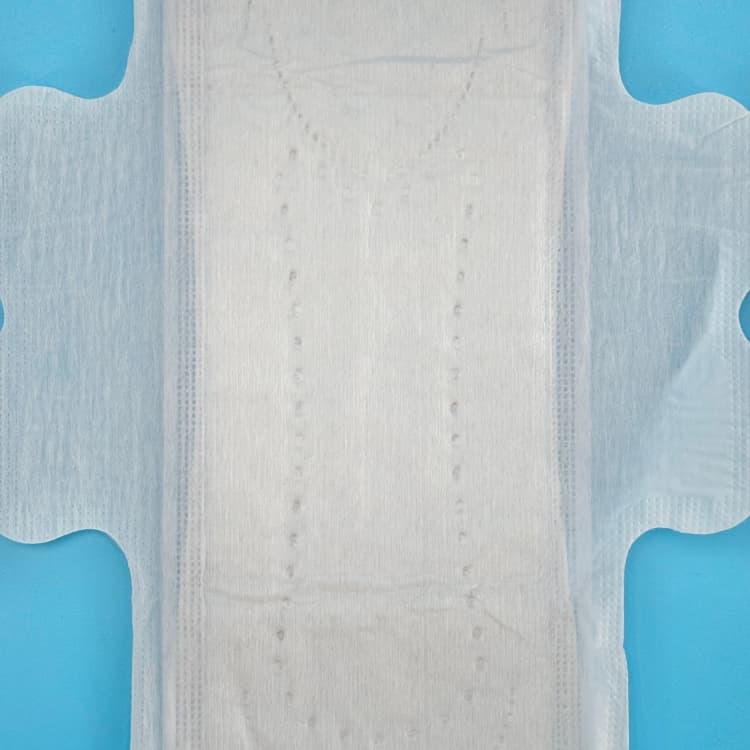
2.1 Raw Material Base & Compliance
Conventional top layer raw materials mainly adopt conventional cotton fiber or synthetic fiber (polyester, rayon, etc.). Conventional cotton is planted with a large amount of pesticides and chemical fertilizers, and the fiber may retain harmful chemical residues after processing, which has hidden dangers in meeting the EU REACH, US FDA, and Chinese national standards for sanitary products. Synthetic fibers have poor breathability and are prone to causing product complaints, which is not suitable for medium and high-end product positioning.
The organic cotton used in the organic cotton top layer is planted in accordance with GOTS (Global Organic Textile Standard) or USDA Organic standards, without the use of synthetic pesticides, herbicides, or GMOs. The fiber has no toxic chemical residues after processing, and can fully meet the global mainstream compliance standards for sanitary pad raw materials. For B-end manufacturers, it can effectively reduce the compliance risk of finished products and lower the cost of product testing and certification.
2.2 Processing Technology & Processability
Conventional top layer fibers are mostly processed by chemical bleaching and softening, which will damage the fiber structure, resulting in poor fiber toughness, easy breakage during automated production (such as carding, weaving, and compounding), and increased production defective rate. At the same time, the chemical additives used in processing may migrate and affect the safety of finished products.
The organic cotton top layer adopts physical processing technology (physical softening, unbleached or hydrogen peroxide bleaching) to retain the integrity of the fiber structure. The processed organic cotton fiber has good toughness, uniform fineness, and strong adaptability to automated production lines—it can be smoothly carded into fleece or knitted into fabric, and has good compounding performance with absorbent cores (no delamination or wrinkling). For B-end manufacturers, it can improve production efficiency and reduce the cost of defective products.
2.3 Performance Stability & Product Value Enhancement
In terms of performance stability, the fiber thickness and density of conventional top layer raw materials vary greatly in batch production, resulting in unstable liquid penetration rate and anti-reflux performance of finished products, which is not conducive to B-end manufacturers in controlling product quality uniformly.
The organic cotton top layer raw materials are strictly controlled in the selection of raw materials and processing links, with small batch fluctuation of fiber indicators (fineness, length, density). The finished top layer has stable penetration rate (fast liquid conduction, reducing anti-reflux), good breathability (reducing stuffiness complaints), and strong moisture retention (avoiding dryness and friction). For B-end manufacturers, it can help stabilize product quality, improve product reputation, and support the pricing power of medium and high-end products.
3. Supply Advantages of Organic Cotton Top Layer Raw Materials for B-end Manufacturers
In addition to the above performance and compliance advantages, organic cotton top layer raw materials also provide targeted support for B-end manufacturers in supply: 1. Stable supply capacity, supporting large-batch orders and ensuring production continuity; 2. Customized processing support, which can be processed into different specifications (fleece thickness, fabric density, width) according to the production needs of manufacturers, matching different product models; 3. Complete certification support, providing GOTS, USDA Organic and other relevant certification documents to help manufacturers reduce the cost of finished product certification and accelerate market access.




 MP/WhatsApp: +86-18050806553
 Manufacturer Address:Juhua Industry Matou Town, Nanan City Fujian Province China