

Hot Keyword:
Author:Baby & Adult Diaper Materials FROM:Diaper Materials Manufacturer TIME:2026-11-09
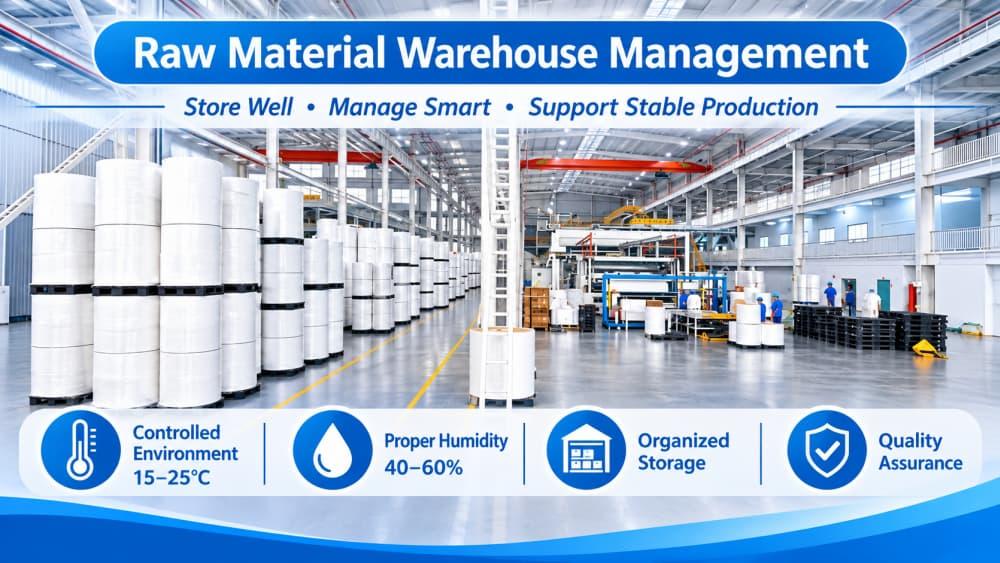
Proper storage is an important part of disposable diaper raw material management. Even when materials meet their original specifications, unsuitable warehouse conditions can affect their quality before they reach the production line.
Nonwoven fabric, PE film, super absorbent polymer (SAP), and fluff pulp have different storage requirements. Moisture, dust, direct sunlight, damaged packaging, and poor inventory rotation can all create unnecessary material losses.
This guide explains how diaper manufacturers and raw material purchasing teams can improve warehouse conditions, manage material shelf life, and maintain better inventory control.
Disposable diaper raw materials are often supplied in rolls, bags, or other protective packaging. Exposure to moisture, dust, heat, or contamination may affect material condition and make it unsuitable for production.
Damaged packaging, incorrect stacking, and poor warehouse organization can lead to material loss. Proper storage helps reduce unnecessary handling damage and protects materials until they are needed.
Materials that are properly stored and clearly identified are easier to locate, inspect, and deliver to the production line. This helps reduce delays caused by missing, damaged, or incorrectly selected materials.
The warehouse should be regularly cleaned and kept free from standing water, dust accumulation, and unnecessary waste. A clean environment helps prevent contamination of raw materials.
Temperature and humidity should be monitored according to the storage requirements of each material. Excessive moisture is particularly important to avoid for moisture-sensitive materials such as SAP and fluff pulp.
There is no single temperature or humidity range suitable for every diaper raw material. Manufacturers should follow the supplier's technical documents and recommended storage conditions.
Materials should be protected from direct sunlight and nearby heat sources. Prolonged exposure to unsuitable conditions may affect packaging and material performance.
Use suitable pallets or storage racks to keep materials away from direct floor contact. Leave sufficient space for inspection, cleaning, ventilation, and material handling.
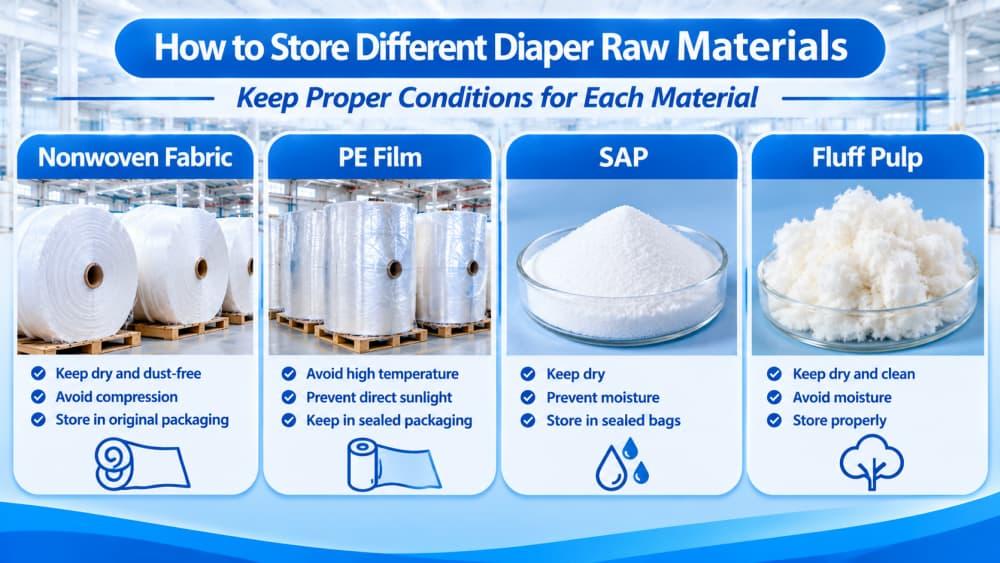
Nonwoven fabric is commonly supplied in large rolls. Keep the original protective packaging intact and protect the rolls from moisture, dust, and physical damage. Avoid unnecessary compression or handling that may deform the rolls.
PE film should be stored in its original packaging and protected from dust, excessive heat, and direct sunlight. Keep the rolls properly supported to avoid deformation or damage to the film surface.
SAP is moisture-sensitive and should be kept in sealed, moisture-resistant packaging. Once a package has been opened, follow the supplier's instructions for resealing and subsequent use.
Fluff pulp should be protected from moisture and contamination. Keep the packaging intact and store it in a clean, dry area. Damaged or wet packaging should be inspected before the material is released for production.
Each incoming material batch should have clear identification information. Record the material name, supplier, batch number, production date, and receiving date whenever this information is available.
Different materials may have different recommended storage periods. Do not assume that all raw materials have the same shelf life. Check the supplier's technical documents and product labels for the applicable information.
Labels should make it easy for warehouse staff to identify material batches and determine which stock needs attention first. Damaged or unclear labels should be corrected before materials are issued to production.
Regular inventory checks help identify materials approaching their recommended storage period, damaged packages, and stock that has remained unused for too long.
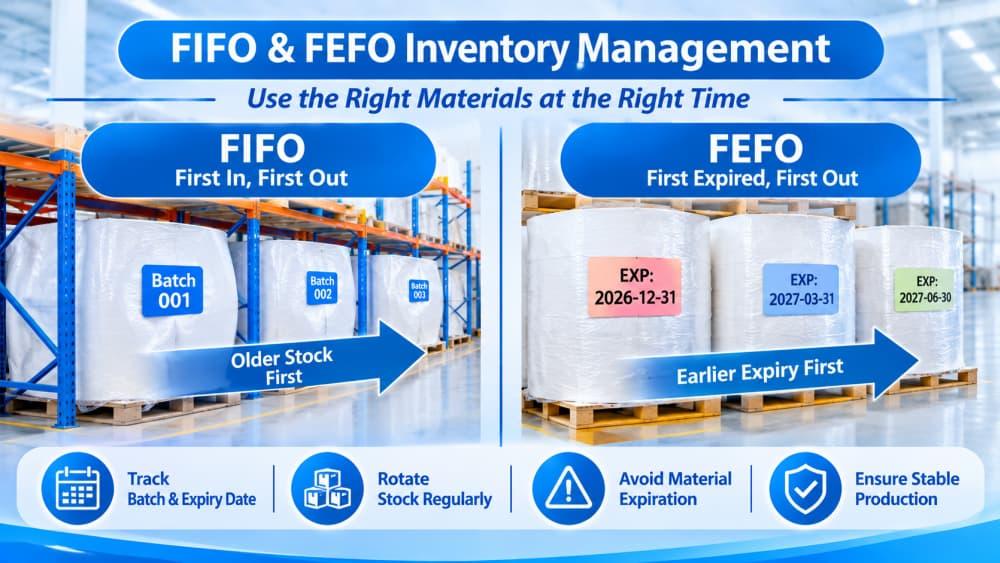
FIFO means First In, First Out. Under this method, materials received earlier are issued for production before newer stock, provided they remain suitable for use.
FEFO means First Expired, First Out. Materials with an earlier expiry or recommended-use date are prioritized, even if they arrived later than other batches.
FIFO is useful for organizing stock according to receiving dates. FEFO is especially important when materials have clearly defined expiry dates or recommended storage periods.
Warehouse teams should select the appropriate method based on material characteristics and supplier instructions. Where expiry dates are relevant, FEFO can help reduce the risk of using materials beyond their recommended period.
Direct floor contact increases the risk of moisture exposure and contamination. Use suitable pallets or racks instead.
Opening material packages before they are needed can expose materials to dust and humidity. Keep packaging sealed until the material is ready for use whenever possible.
Mixing batches without proper identification makes traceability difficult. Keep batch information visible and organize materials by type, supplier, and batch number.
Without accurate receiving, issuing, and inventory records, warehouse teams may lose track of stock age and material condition. Update records whenever materials enter or leave the warehouse.
Before production, confirm that the material type, width, GSM, roll dimensions, and other required specifications match the purchase order and approved technical documents.
Check for damaged rolls, contamination, moisture exposure, deformation, and other visible problems. Any questionable material should be separated for further inspection.
Check whether the outer packaging is intact and whether the material labels and batch information are clear. Confirm that the delivered materials match the relevant order and documentation.
Review the production date, expiry date, or recommended-use period where applicable. Materials with unclear identification or questionable storage history should be checked before being released to production.
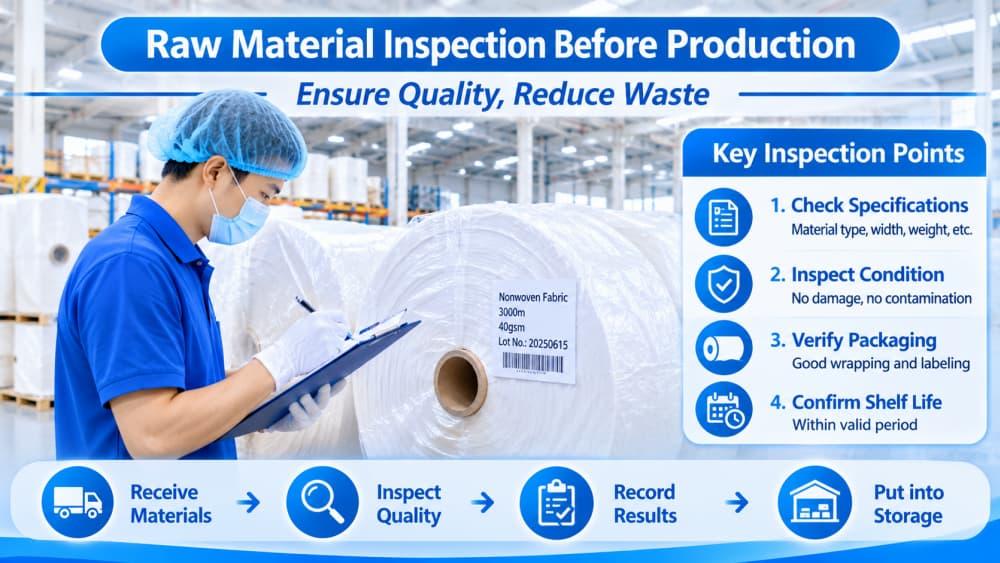
Store materials in a clean, dry, and organized warehouse. Protect them from moisture, dust, direct sunlight, and physical damage. Follow the specific storage instructions for each material.
Yes. SAP is moisture-sensitive and should be kept in sealed, moisture-resistant packaging. Follow the supplier's instructions for storage and handling after opening.
FIFO prioritizes materials received first, while FEFO prioritizes materials with the earliest expiry or recommended-use date. Both methods help improve inventory organization.
Maintain suitable warehouse conditions, protect original packaging, label material batches clearly, rotate inventory regularly, and inspect materials before production.
Yes. Checking specifications, packaging, visible condition, batch information, and shelf-life records helps identify potential problems before materials enter the production process.
Proper storage and inventory management are essential for protecting diaper raw materials and supporting stable production. Clean warehouse conditions, suitable material-specific storage practices, clear batch identification, and regular inventory rotation can help manufacturers reduce material losses.
For raw material suppliers and manufacturers, good storage management is also an important part of quality control. Materials should be properly protected from receiving through storage and final use, with storage conditions based on the requirements of each material.

 MP/WhatsApp: +86-18050806553
 Manufacturer Address:Juhua Industry Matou Town, Nanan City Fujian Province China