

Hot Keyword:
Author:Baby & Adult Diaper Materials FROM:Diaper Materials Manufacturer TIME:2026-11-06
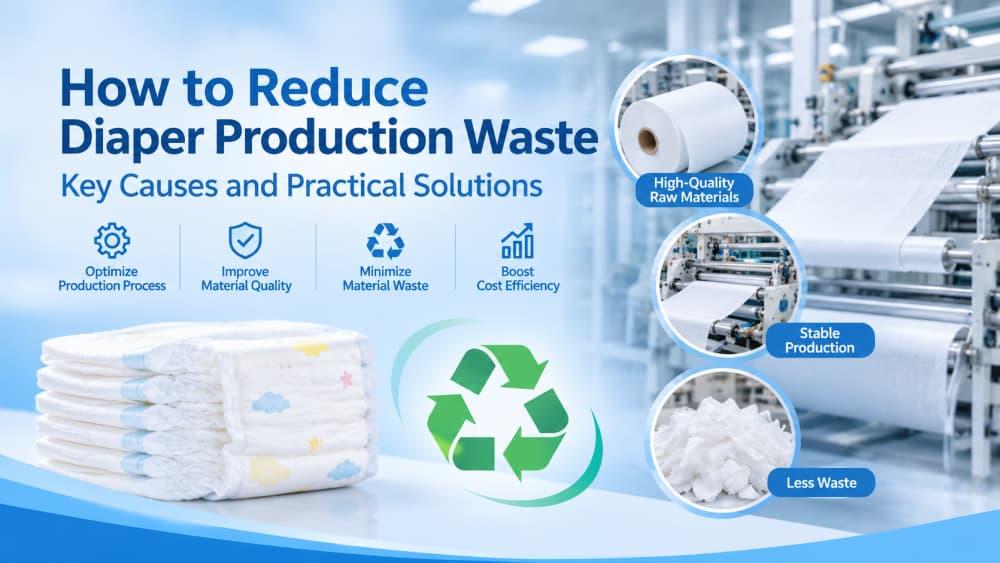
Diaper production waste can increase manufacturing costs, reduce line efficiency, and affect product consistency. For disposable hygiene manufacturers, reducing waste is not only about improving machine performance. It also requires stable raw materials, effective process control, and clear quality standards.
This guide explains where diaper production waste commonly occurs and what manufacturers can do to reduce it.
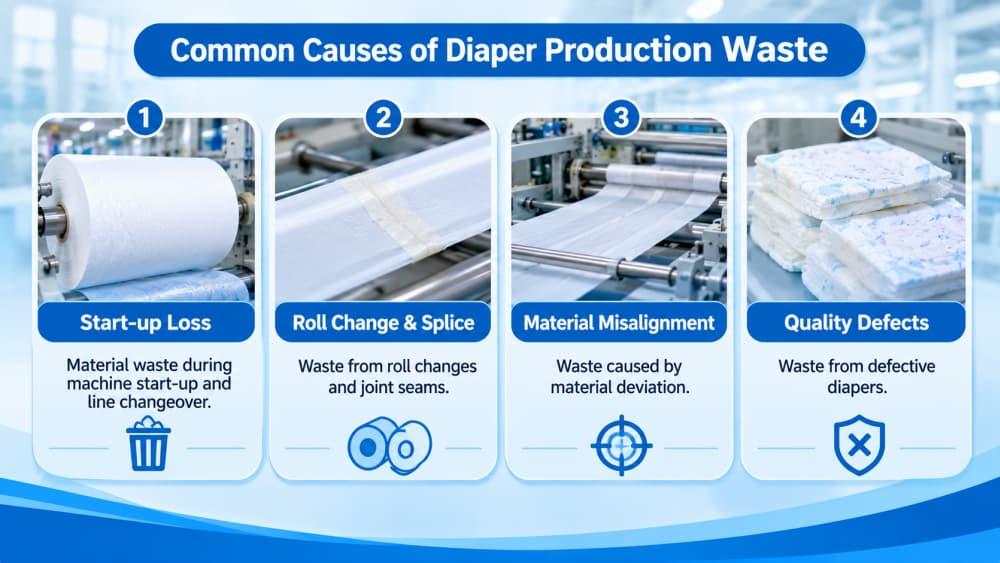
Diaper production waste can occur at different stages, from material loading to finished-product inspection. Identifying the source is the first step toward reducing it.
When a production line starts or changes product specifications, operators may need time to adjust machine settings and stabilize production. Materials used during this period may not meet the required quality standards.
Frequent roll changes can create material waste, especially when splices are not properly controlled or the line requires stopping for replacement. Poorly made or unstable splices may also lead to defects downstream.
If raw materials shift from their intended positions, the finished diaper may have uneven layers, poor bonding, or appearance defects. Misalignment can result from unstable web tension, incorrect guiding, or unsuitable machine settings.
Defects such as incomplete bonding, incorrect component placement, or inconsistent product dimensions may cause finished products to be rejected. These defects can involve several materials and production steps, so the root cause should be investigated rather than treated only as a final inspection issue.
A waste-reduction plan works best when manufacturers record where and when waste occurs.
Separate waste into categories such as start-up, changeover, roll replacement, process adjustment, and quality rejection. This helps the production team identify recurring problems instead of treating all waste as one total figure.
Track the amount of material used, the quantity of rejected products, and the reason for rejection. Records should be consistent across production shifts so that results can be compared.
Different diaper sizes, designs, and production lines may have different waste patterns. Reviewing the data by product type and line can help identify where improvement efforts will have the greatest impact.
Start-up and changeover waste can often be reduced through preparation and standardized operating procedures.
Confirm that the required raw materials, specifications, and roll quantities are ready before the line starts. This can reduce delays caused by missing materials or incorrect roll selection.
Document the sequence for changing product specifications, adjusting machine settings, and checking the first acceptable products. A consistent procedure helps reduce variation between operators and shifts.
Before regular production continues, verify key product characteristics such as component positioning, bonding, dimensions, and appearance. Clear acceptance criteria help operators determine when the line is stable.
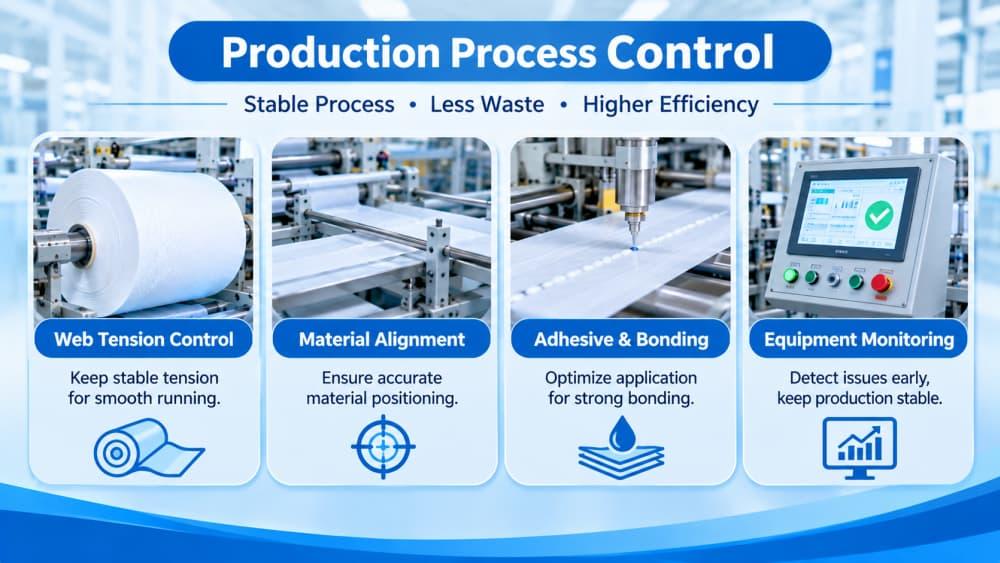
Stable production conditions help reduce material deviation and prevent defects from recurring.
Unstable tension can cause stretching, wrinkles, or material tracking problems. Manufacturers should establish suitable tension settings for each material and monitor them during production.
Guiding systems and material positions should be checked regularly. Correct alignment helps ensure that each component is placed consistently and reduces waste caused by material deviation.
Adhesive application and bonding conditions can affect product integrity. Manufacturers should verify that adhesive settings are appropriate for the materials and production speed, and investigate recurring bonding defects.
Routine maintenance helps reduce unexpected stops and process instability. Detection and rejection systems should also be checked to ensure that defects are identified and removed consistently.
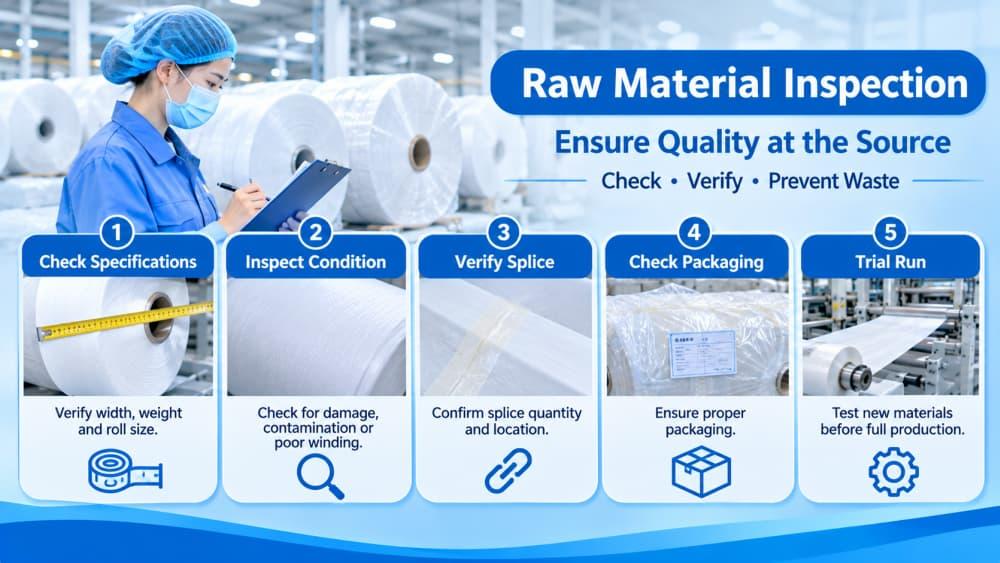
Raw material consistency is an important part of stable diaper production. Materials with inconsistent specifications or roll quality may require additional adjustments and increase the risk of waste.
Before production, verify key specifications such as material type, width, basis weight where applicable, roll diameter, and core dimensions. These checks help confirm that the material is suitable for the intended production line.
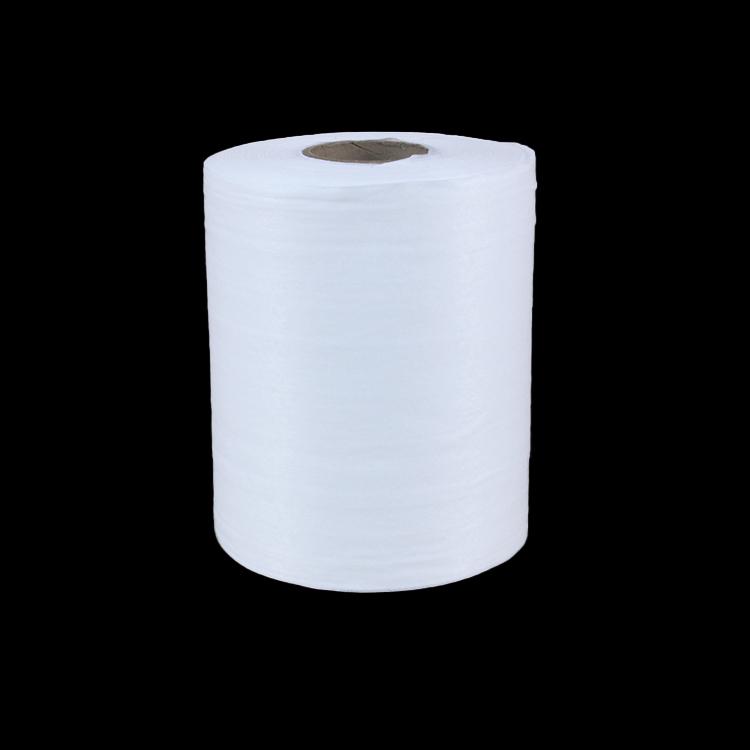
Check for damaged edges, loose winding, contamination, moisture exposure, or packaging damage. Poor roll condition may affect material feeding and production stability.
For materials supplied with splices, confirm that splice quantity, location, and identification meet the agreed requirements. Clear splice information helps operators prepare for roll changes and manage potential waste.
When introducing a new material or changing suppliers, conduct a controlled production trial. Record machine settings, material performance, quality results, and any adjustments required before approving regular use.
Waste reduction is more effective when manufacturers and raw material suppliers work together.
Provide suppliers with consistent specifications and acceptance criteria. Clear requirements reduce misunderstandings and help ensure that delivered materials match production needs.
When a material-related issue occurs, share relevant details such as the material batch, production line, machine settings, defect type, and inspection results. This makes root-cause analysis more efficient.
After a problem is identified, confirm what corrective action has been taken and whether it prevents recurrence. Both sides should retain records of the issue and the agreed solution.
Waste reduction should be managed as an ongoing improvement activity rather than a one-time project.
Establish measurable targets based on current production data. Targets should be realistic and reviewed regularly.
Discuss waste records, recurring defects, and improvement actions with operators, quality staff, maintenance teams, and material purchasing teams.
When an improvement is confirmed, update relevant operating procedures and inspection requirements. This helps maintain the improvement across shifts and production runs.
Waste may occur during start-up, changeover, roll replacement, process adjustment, and quality rejection. The most significant source varies by production line and product design, so manufacturers should review their own production records.
Yes. Inconsistent material specifications, poor roll condition, or unsuitable material performance may increase machine adjustments, production interruptions, or quality defects.
Manufacturers can prepare replacement rolls in advance, standardize roll-change procedures, verify splice requirements, and train operators to follow consistent steps.
A controlled trial is recommended when introducing a new material or changing suppliers. It allows the production team to evaluate material compatibility, machine settings, and product quality before routine use.
Reducing diaper production waste requires a systematic approach. Manufacturers should identify the main sources of waste, measure them consistently, improve start-up and changeover procedures, maintain stable process conditions, and strengthen raw material inspection.
By combining production control with clear material specifications and supplier communication, diaper manufacturers can work toward more consistent production, lower material loss, and improved manufacturing efficiency.

 MP/WhatsApp: +86-18050806553
 Manufacturer Address:Juhua Industry Matou Town, Nanan City Fujian Province China