

Hot Keyword:

Author:Baby & Adult Diaper Materials FROM:Diaper Materials Manufacturer TIME:2026-10-28
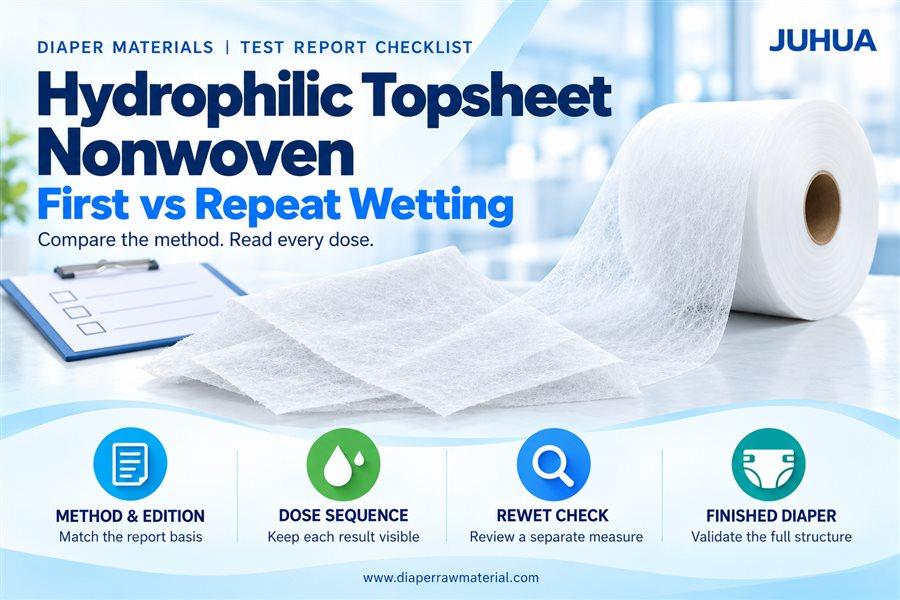
Hydrophilic topsheet nonwoven should be compared using the complete wetting test sequence, rather than the fastest first result alone. A first strike-through result describes one measured liquid passage; repeated testing adds observations after subsequent doses under a defined procedure. Neither result, by itself, establishes rewet, diaper absorption capacity or leakage performance. For diaper material purchasing, first verify the method and edition, specimen identity and reporting conditions. Then compare the corresponding dose results, review a separate rewet assessment where required, and validate the candidate topsheet in the intended diaper construction before approving a substitution.
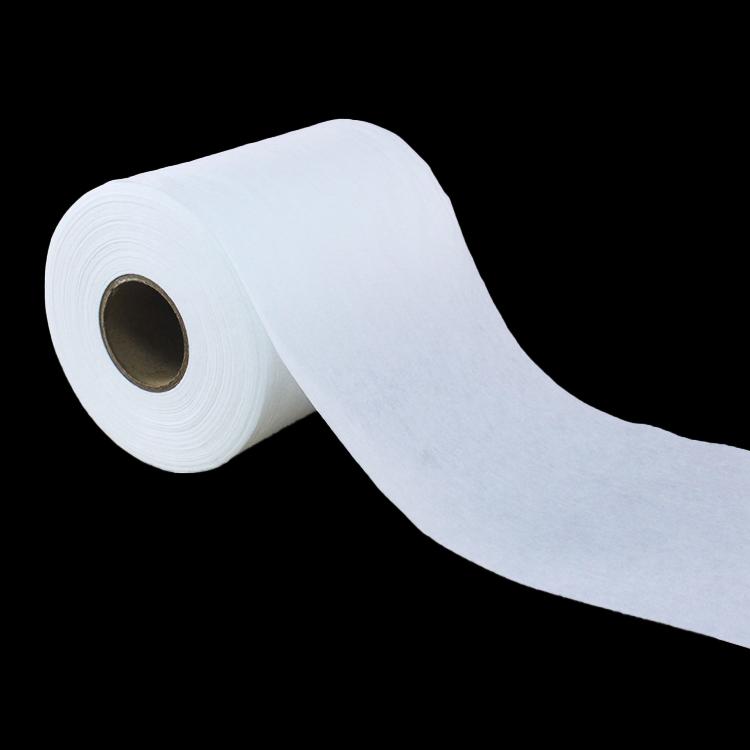
A diaper topsheet is the cover layer through which liquid must pass toward the underlying absorbent structure. In material evaluation, the useful question is how a specified nonwoven behaves in a documented liquid-passage test. Terms such as hydrophilic, soft and porous describe different aspects of the material; none substitutes for a traceable result.
The published scope of ISO 9073-8:2025 concerns simulated-urine strike-through testing of nonwoven coverstocks. It supports material comparisons while explicitly separating the laboratory measurement from actual finished-product use. The method reference therefore belongs beside the reported time, not in a general company brochure.
Keep the tested object visible in the report. A loose nonwoven specimen, a laminate and an assembled diaper are different objects. If a supplier uses the word acquisition for several of them, request a precise definition before comparing values. Also establish whether a brochure value is an illustrative grade characteristic or a result linked to the sample being offered.
A first-dose value answers a narrower question than a series of dose-specific values. The first result should remain identifiable even when the report also contains later results. A single overall average can hide the sequence and prevent buyers from checking the requirement that matters to their application.
ISO 9073-13:2023 addresses strike-through measurements for three successive simulated-urine doses on a nonwoven specimen. Its stated purpose is coverstock comparison and quality control, rather than reproduction of diaper wearing conditions. Ask the laboratory to identify the procedure actually used; a report labelled only “three-time hydrophilic” does not establish compliance with that standard.
Do not substitute a standalone first-dose result from one procedure for the first entry of another procedure without technical review. Matching the dose number alone does not establish equivalent preparation or apparatus. Likewise, a description such as repeated hydrophilicity is incomplete unless it identifies the dose sequence, evaluation method and acceptance basis.

Make a comparison sheet before making a price or performance ranking. Record missing fields as unresolved rather than assuming the laboratories followed identical practices. The table below is a purchasing review tool, not a replacement for a licensed test method or a laboratory operating procedure.
| Review field | What to record | Decision when information is missing |
|---|---|---|
| Material identity | Grade, lot, roll reference, basis weight in g/m² and sampled face | Do not transfer the result to an unidentified offered material. |
| Method reference | Full designation, edition and declared deviations | Ask the laboratory to establish whether reports are comparable. |
| Specimen preparation | Conditioning, handling and sampling description | Resolve preparation differences before attributing a change to the grade. |
| Liquid and dosing | Test liquid, dose volume in mL, sequence and interval in the stated units | Request the test record; do not infer the procedure from a droplet photograph. |
| Test assembly | Apparatus and underlying absorbent medium specified by the procedure | Keep unlike assemblies in separate comparison groups. |
| Reported results | Strike-through time in s by dose, specimen count and the reported spread | Request dose-specific results and clarification of the summary statistic. |
| Acceptance rule | Agreed limits, treatment of individual results and retest conditions | Complete the approval rule before issuing a pass decision. |
A named standard is a starting point for this review. Where a laboratory departs from that procedure, the report should identify the departure and its purpose. Avoid presenting an internal screening experiment as an unmodified standard test.
Read corresponding results horizontally across candidate materials and vertically through each material's sequence. If one candidate records a shorter first time but longer later times, the report contains a trade-off to evaluate. It does not justify calling that candidate universally faster, nor does it establish why the pattern occurred.
Keep individual specimen results alongside the summary. A difference between averages deserves a different discussion when specimen results are tightly grouped than when they are widely dispersed. Ask the testing team whether the observed difference is meaningful given its method precision and repeatability. Do not treat every small numerical gap as a material advantage.
A later result outside an agreed limit should trigger a documented investigation. Review sample identity, preparation, test assembly and the material information supplied. Do not diagnose a treatment formulation, contamination event or storage problem from the sequence alone. Repeating only the most favourable specimen would remove useful evidence; any retest should follow an agreed rule and preserve the original record.
Strike-through time and rewet answer different questions. One concerns liquid passage during the stated test; the other assesses liquid returned toward the surface under its own defined procedure. A short passage time cannot be converted into a rewet value or a claim about skin dryness.
The EDANA nonwoven procedure index lists coverstock strike-through, repeated strike-through and wetback procedures separately. That distinction is useful when requesting evidence: specify the measurement needed rather than asking for a generic absorption test.
After material screening, evaluate the selected topsheet in the intended diaper structure under the manufacturer's approved validation plan. Record the ADL, absorbent core, bonding arrangement and product configuration so the result can be interpreted. Keep the nonwoven comparison report and diaper validation report as separate records with a clear link between them. Approval for one construction should not silently become approval for every diaper size or design.
Organise the trial around a current approved reference and clearly identified candidates. This is a proposed purchasing workflow; the laboratory remains responsible for the specified sampling and testing procedure.
Record any difference between laboratory sample preparation and normal material handling. If the candidate was specially prepared, ask whether that preparation also applies to commercial supply. A successful sample result is difficult to use for purchasing when the supplied grade or treatment cannot be linked to it.

After qualification, turn the accepted evidence into a requirement the supplier and receiving team can interpret consistently. Identify the approved topsheet grade, required method edition, relevant dose-specific limits and reporting frequency. Define whether a value is informational, a contractual acceptance limit or a periodic qualification check.
A requirement that says only “good hydrophilicity” leaves too much open. A stronger requirement names the measurement, reporting units and agreed decision rule, with the underlying procedure referenced separately. Limits should come from the buyer's qualification and product needs; do not copy a numerical limit from an unrelated online listing and apply it to every construction.
When reviewing JUHUA topsheet nonwoven options, identify the exact offered material and ask which current reports can be linked to the evaluation sample. Confirm whether the proposed supply has the same specification as the qualified sample. Agree how changes to the approved grade, treatment designation or manufacturing specification will be communicated and reviewed.
Finally, keep the commercial order reference connected to the technical approval. The purchasing description should be specific enough that a similarly named hydrophilic nonwoven cannot be substituted without review.
If a supplier report and receiving-laboratory report disagree, first establish that they concern matching material and an equivalent test basis. Check method editions, deviations, specimen face, conditioning, sampling history and the sequence actually reported. A disagreement between two differently defined measurements is not yet evidence of a batch failure.
Keep the affected material identifiable while the quality team applies the agreed disposition process. Exchange the relevant records and, where needed, arrange a controlled comparison using traceable retained specimens. Document who selected the samples, what was tested and how a repeat or referee result will affect the decision.
Once resolved, update the report or specification that caused the ambiguity. If the issue remains unresolved, record the missing evidence and limit the approval accordingly. Avoid converting a provisional commercial release into a permanent technical acceptance without the responsible team's decision.
No. A demonstration may show visible wetting under the conditions shown, but it does not establish a specified dose sequence, timing procedure or acceptance limit. Use it to frame questions, then request the relevant laboratory report.
No. Basis weight identifies mass per unit area, not a complete liquid-handling specification. Materials with the same stated g/m² still require the relevant wetting evidence and product validation. Keep basis weight as an identification field rather than a replacement for performance testing.
Do not create an aggregate purchasing score unless its purpose and interpretation have been agreed. Adding times can obscure which dose failed a requirement. Retain the dose-specific values even if an internal evaluation also uses a justified summary.
Ask the laboratory to review the edition against the contractual requirement and explain any relevant differences. Do not relabel the old report as a newer edition. A decision to accept it should identify the review basis and any additional evidence needed.
No. A report establishes observations for the specimens and conditions tested. Storage-life or ageing claims require evidence covering the claimed period and conditions for that grade. Request that evidence separately if it affects the purchasing decision.
For hydrophilic topsheet nonwoven, the useful purchasing comparison is a traceable set of results with a defined testing basis. Preserve the first and subsequent dose observations, resolve differences in report conditions and assess rewet through the appropriate separate procedure. Move from material screening to diaper validation through explicit approval gates. Before placing the order, ensure the offered grade, acceptance requirements and change-control arrangement all refer to the material that was actually qualified.

 MP/WhatsApp: +86-18050806553
 Manufacturer Address:Juhua Industry Matou Town, Nanan City Fujian Province China