


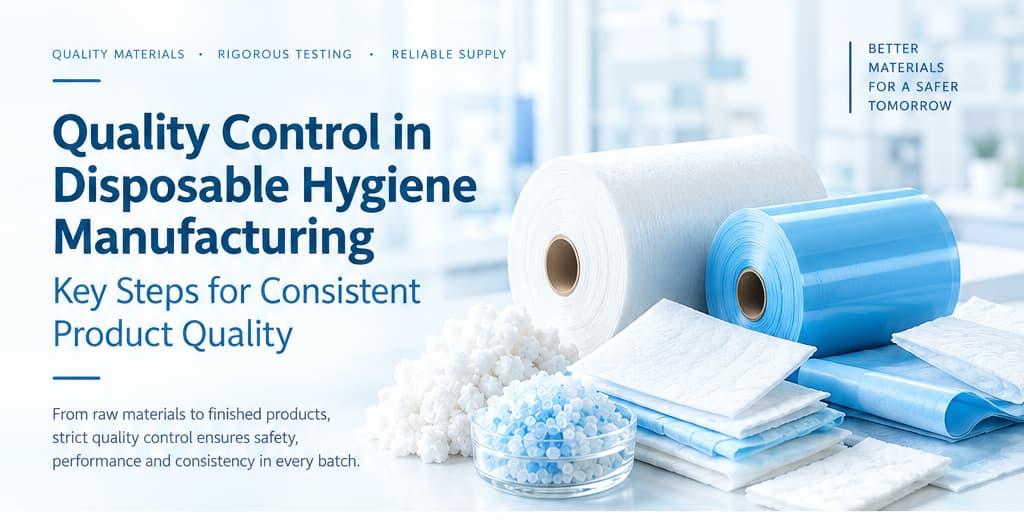
Quality Control in Disposable Hygiene Manufacturing: Key Steps for Consistent Product Quality
Introduction
Quality consistency is essential in disposable hygiene manufacturing. Whether producing baby diapers, sanitary napkins, adult incontinence products, underpads, or other absorbent hygiene products, manufacturers need to ensure that products meet defined performance, safety, and appearance requirements.
Even when a product design is well developed, variations in raw materials, machine settings, production conditions, or inspection procedures can affect the final result.
For this reason, quality control should not be limited to checking finished products before shipment. It should cover the entire manufacturing process, from incoming raw materials to production monitoring and final inspection.
A systematic quality control process helps manufacturers identify problems earlier, reduce production losses, and maintain consistent product quality across batches.
1. Why Quality Control Matters in Disposable Hygiene Manufacturing
1.1 Consistent Quality Builds Customer Confidence
Disposable hygiene products are used for personal care, comfort, and protection. Customers expect products to perform consistently from one package to the next. Differences in absorbency, fit, softness, leakage protection, or product appearance may affect customer satisfaction. For manufacturers supplying private-label brands, distributors, or institutional buyers, maintaining consistent quality is also important for long-term business relationships.
1.2 Quality Problems Can Affect the Entire Production Process
A quality issue may originate from raw materials, machine settings, component positioning, or the assembly process. For example, inconsistent material width can affect alignment, while unstable adhesive application may weaken bonding between components. If these problems are not detected early, they may lead to defective products, production interruptions, additional inspection, or rejected batches.
1.3 Prevention Is Better Than Final Inspection Alone
Final inspection is important, but it cannot prevent every production problem. A more effective approach combines incoming material inspection, in-process monitoring, finished product testing, and corrective action. This allows manufacturers to identify potential problems before they affect a large quantity of products.
2. Incoming Raw Material Inspection
2.1 Verify Material Specifications
Incoming materials should be checked against approved specifications and purchasing requirements. Depending on the material, relevant parameters may include:
- GSM and thickness
- Width and dimensions
- Tensile strength and elongation
- Absorption and retention properties
- Elasticity and recovery
- Appearance and color
- Packaging condition
Not every parameter applies to every material. Inspection requirements should reflect the material's function and the product's technical requirements.
2.2 Check Documentation and Batch Information
Technical Data Sheets (TDS), Certificates of Analysis (COA), and other relevant documents can support incoming material inspection. A TDS describes the material's specifications and technical characteristics, while a COA generally records test results for a specific batch. Buyers and quality teams should confirm that the supplied material matches the approved grade and that the accompanying documentation is consistent with the shipment.
2.3 Inspect Material Appearance and Packaging
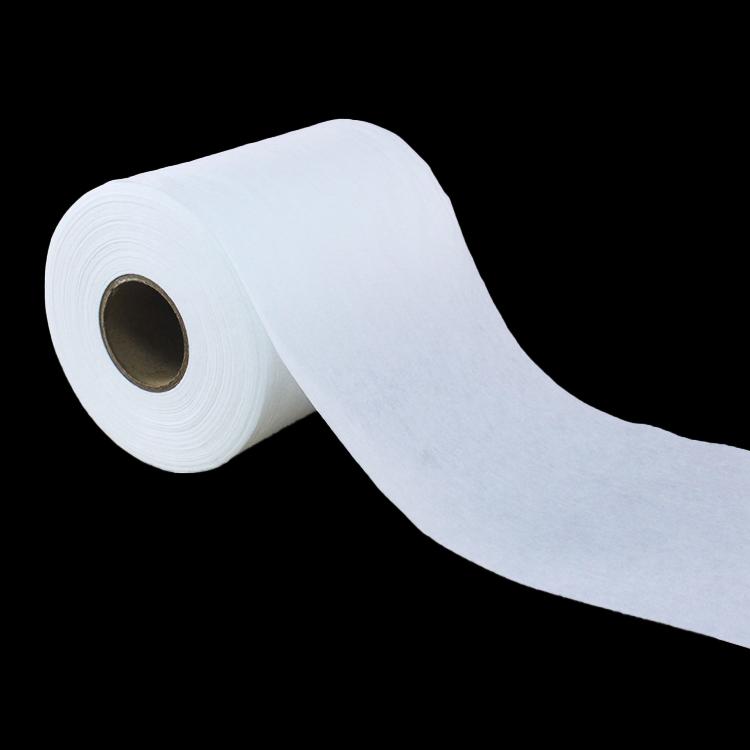
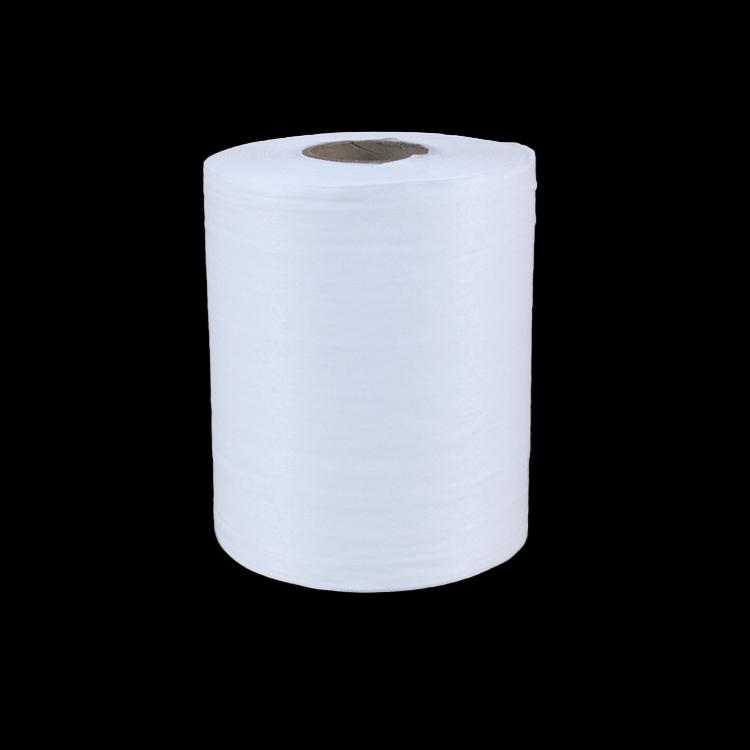
Visual inspection can help identify obvious problems before materials enter production. Examples include damaged packaging, contamination, uneven surfaces, visible defects, or signs of improper handling. For roll materials, teams may also check roll edges, winding condition, labeling, and dimensions. Visual inspection should complement, rather than replace, the relevant physical and functional tests.
3. Quality Control During Production
3.1 Monitor Machine Settings and Production Conditions
Production parameters can influence the consistency of finished hygiene products. Depending on the equipment and product design, important variables may include machine speed, adhesive application, tension, cutting position, sealing conditions, and component alignment. Manufacturers should establish suitable operating ranges and monitor whether the production line remains within them.
3.2 Check Component Positioning and Bonding
Disposable hygiene products combine multiple materials that must work together. Quality teams should monitor whether components are correctly positioned and securely bonded. Examples include:
- Topsheet and ADL alignment
- Absorbent core positioning
- Backsheet placement
- Elastic attachment
- Front and side tape positioning
- Adhesive bonding between components
Incorrect positioning or weak bonding may affect product appearance, comfort, fit, or leakage protection.
3.3 Monitor Product Dimensions and Appearance
Regular checks can identify variations in product size, shape, cutting, folding, and component placement. For diapers and adult incontinence products, teams may check symmetry, elastic placement, leg cuff formation, and fastening components. For sanitary napkins, relevant checks may include pad dimensions, wing positioning, surface appearance, and release paper placement. Inspection criteria should be adapted to each product type.
3.4 Use In-Process Sampling
Checking every production parameter continuously may not be practical, but planned sampling can help identify changes during production. Sampling frequency should reflect product risk, production speed, process stability, and customer requirements. When a sample fails to meet an established limit, the team should investigate the cause and determine whether additional inspection or corrective action is needed.
4. Finished Product Inspection
4.1 Check Appearance and Dimensions
Finished products should be inspected against approved acceptance criteria. Common checks include:
- Product length and width
- Shape and symmetry
- Component alignment
- Surface cleanliness
- Cutting quality
- Elastic and fastening component placement
- Packaging and labeling
These checks help identify visible defects and dimensional inconsistencies before products are released.
4.2 Test Absorption and Leakage Protection
Absorbent hygiene products must meet the performance requirements defined for their intended use. Depending on the product, testing may include absorption capacity, fluid acquisition, retention, rewet, leakage resistance, or fluid distribution. A single absorption result does not necessarily describe overall product performance. Test methods and conditions should be consistent when comparing products or production batches.
4.3 Evaluate Comfort and Fit
Comfort-related quality checks may include softness, flexibility, elasticity, and fit-related characteristics. For products worn close to the body, material stiffness, rough edges, poor elastic recovery, or incorrect sizing can affect the user experience. Manufacturers should define suitable test methods and acceptance criteria for the intended product and target user.
4.4 Verify Packaging and Traceability
Packaging protects products during storage and transportation. Quality teams should check package integrity, product quantity, labeling accuracy, and relevant batch information. Traceability is particularly important when a quality issue is discovered after shipment. Batch codes and production records help identify affected products and support an investigation.
5. Common Quality Problems in Disposable Hygiene Products
5.1 Absorbency and Leakage Problems
Insufficient absorption, poor fluid distribution, or inadequate leakage protection may result from material selection, absorbent core design, component positioning, or production variation. Investigations should examine the whole product structure rather than assuming that one material is always responsible.
5.2 Bonding and Assembly Defects
Weak adhesive bonding, misplaced components, or poorly attached elastic materials can affect product integrity. Possible causes include unsuitable application settings, incompatible materials, incorrect tension, or inconsistent machine operation.
5.3 Dimensional and Appearance Variations
Differences in product size, cutting, folding, or alignment may result from machine adjustment, material variation, or process instability. Routine measurement and in-process inspection can help identify these issues before they affect a large batch.
5.4 Packaging and Labeling Errors
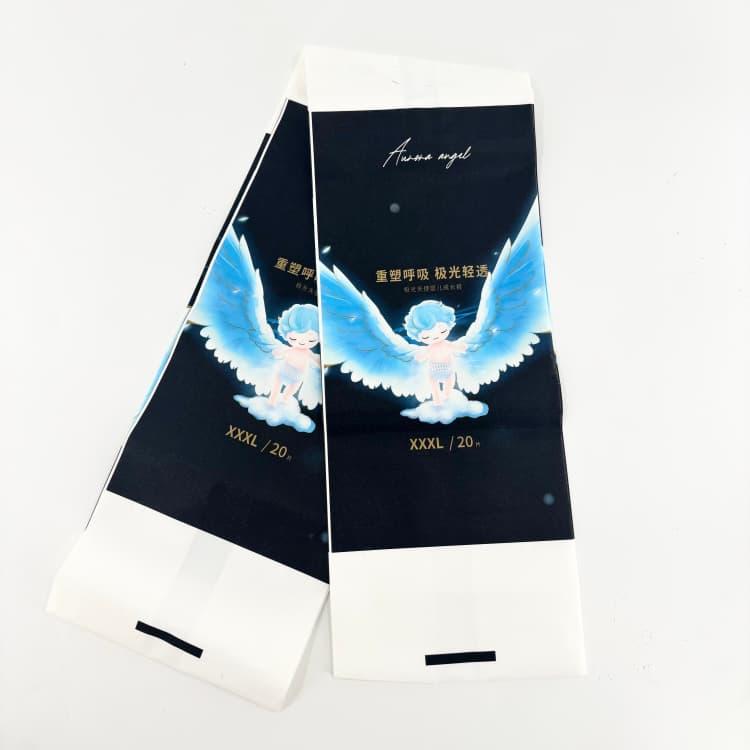
Incorrect product counts, damaged packages, or inaccurate labels can create problems even when the product itself meets its technical specifications. Packaging inspection should therefore be included in the final quality control process.
6. How to Build a More Effective Quality Control System
6.1 Establish Clear Specifications and Acceptance Criteria
Each product should have documented requirements for its materials, dimensions, functional performance, appearance, and packaging. Acceptance criteria should be clear enough for production and quality teams to apply consistently.
6.2 Standardize Testing Methods
Results are difficult to compare when testing conditions or methods differ. Manufacturers should use documented procedures, appropriate equipment, and consistent sample preparation. Equipment calibration and operator training also help improve reliability.
6.3 Maintain Production and Inspection Records
Records should capture relevant information such as material batches, machine settings, inspection results, defects, and corrective actions. These records make it easier to identify recurring problems and determine whether a change has improved the process.
6.4 Investigate Root Causes and Verify Corrective Actions
When a defect occurs, simply removing the defective products may not solve the underlying problem. Teams should investigate the cause, implement appropriate corrective action, and verify that the problem has been controlled. For recurring issues, reviewing both material data and production records can help distinguish material-related variation from process-related problems.
6.5 Work With Raw Material Suppliers on Quality Consistency
Raw material quality is one part of the overall manufacturing quality system. Clear specifications, agreed test methods, batch documentation, and communication about changes can help manufacturers and suppliers manage material variation more effectively. For material changes, manufacturers should assess compatibility with the existing product design and production process before approving the change for regular production.
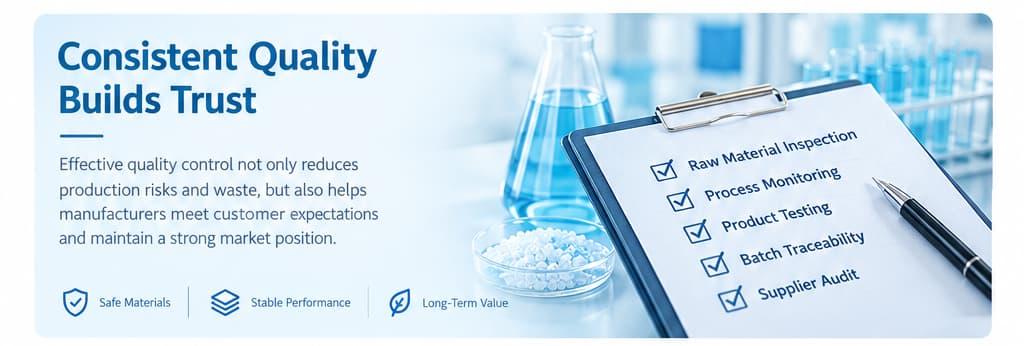
7. A Practical Quality Control Checklist
7.1 Incoming Materials
- Are materials checked against approved specifications?
- Are batch numbers and labels verified?
- Are relevant TDS and COA documents available?
- Are material appearance and packaging inspected?
7.2 Production Monitoring
- Are key machine parameters monitored?
- Are components positioned correctly?
- Are bonding and cutting quality checked?
- Is in-process sampling performed according to a defined plan?
7.3 Finished Products
- Are dimensions and appearance within acceptance limits?
- Are relevant absorption and leakage tests completed?
- Are fit and comfort requirements evaluated where applicable?
- Are packaging, labeling, and product quantities verified?
7.4 Quality Management
- Are inspection records maintained?
- Are defects investigated and documented?
- Are corrective actions verified?
- Are material or process changes reviewed before implementation?
8. Conclusion
Quality control in disposable hygiene manufacturing requires more than inspecting finished products. It involves managing material quality, monitoring production conditions, testing product performance, and maintaining reliable records throughout the manufacturing process.
By establishing clear specifications, standardizing inspection methods, identifying defects early, and working closely with raw material suppliers, manufacturers can improve consistency and reduce avoidable production problems.
The goal is not simply to detect defective products before shipment. It is to build a manufacturing process that consistently produces products meeting their intended quality and performance requirements.

Reliable Raw Materials for Better Hygiene Products
Contact our team to discuss your disposable hygiene raw material requirements and quality control needs.
Contact Us →


 MP/WhatsApp: +86-18050806553
 Manufacturer Address:Juhua Industry Matou Town, Nanan City Fujian Province China