

Hot Keyword:

Author:Baby & Adult Diaper Materials FROM:Diaper Materials Manufacturer TIME:2026-09-24
Diaper topsheet roll specifications should be checked as converting inputs, not only as purchasing labels. For baby diaper and adult incontinence production, the key checks are material type, GSM, roll width, paper core size, outside diameter, splice condition, roll winding, packing protection and document consistency. A topsheet can look acceptable on a sample sheet but still cause feeding, bonding or appearance problems if the roll format does not match the converter's actual unwinder, web path and inspection rules. This article focuses on hydrophilic nonwoven topsheet rolls and explains what buyers should confirm before sample approval or repeat purchase.

The topsheet is the layer that directly faces the wearer in a diaper or incontinence product. In purchasing discussions, it is often described by simple words such as soft, hydrophilic, white or nonwoven. Those words are useful for first screening, but they are not enough for production approval. A buyer also needs the roll data that tells the factory whether the material can be unwound, guided, cut, bonded and inspected without avoidable stoppages.
Roll specifications matter because a converting line handles material as a continuous web. Width variation, unstable winding tension, a damaged roll edge or an unexpected splice can create waste even when the nonwoven itself is the correct material. The same issue can also affect visual quality, side alignment or glue application. For this reason, topsheet purchasing should connect the material specification with the factory's handling conditions.
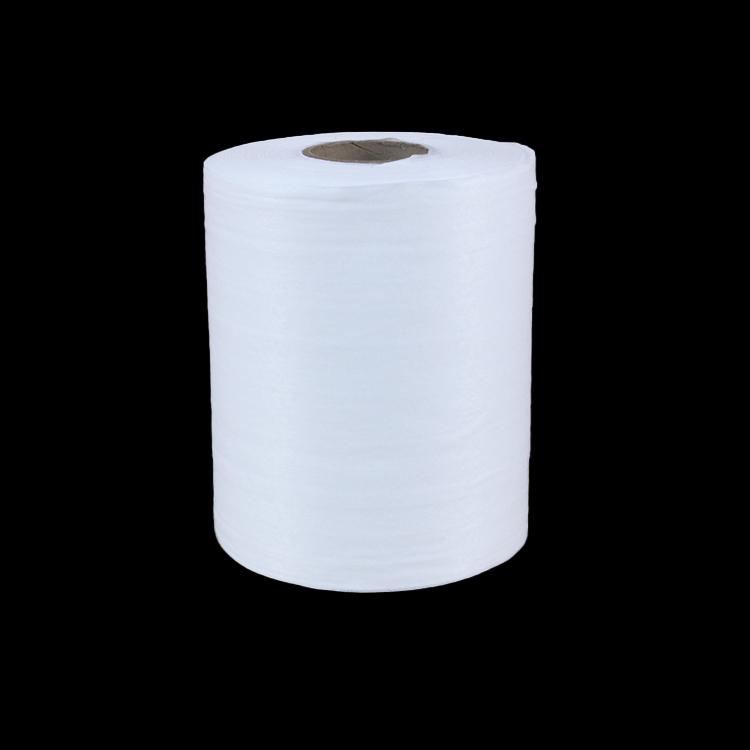
A public JUHUA hydrophilic nonwoven product page shows an example topsheet-related roll specification with 18 plus or minus 2 GSM, 180 plus or minus 2 mm width, 76 plus or minus 1 mm paper core and outside diameter range of 580 to 780 mm. These figures should be treated as product-specific examples, not as universal limits for every topsheet roll. The correct data must always be confirmed against the target product page, quotation and technical document.
The first check is the material identity. Buyers should confirm whether the quoted item is a hydrophilic nonwoven topsheet, an acquisition distribution layer, a leg cuff nonwoven, an elastic nonwoven or another hygiene material. Similar-looking roll goods can have different surface treatment, structure and application positions. A topsheet roll should not be approved only because it is white and nonwoven.
In a diaper structure, the topsheet needs to receive liquid and help transfer it to the absorbent system. This does not mean the topsheet alone determines dryness, leakage protection or total absorption capacity. Those finished-product results depend on the combined design of the topsheet, ADL, core, SAP, fluff pulp, backsheet, glue application, elastic materials and production settings. A responsible topsheet specification separates material-level requirements from finished-diaper validation.
For procurement, the material name should appear consistently in the inquiry, quotation, sample label, packing list, certificate of analysis and internal trial report. If one document says topsheet nonwoven and another says ADL nonwoven, the buyer should pause and clarify the item before testing. This small document check prevents a trial result from being linked to the wrong material.
Roll width is one of the most practical specifications because it interfaces directly with the production line layout and the product size. Buyers should confirm the nominal width, tolerance, measurement method and whether the width is supplied as slit width after edge trimming. The width should be checked at several positions across the roll or at agreed sampling points, because edge waviness or uneven slitting may not appear in one measurement.
A quoted width is not automatically correct for every diaper size. The purchasing team should compare it with the product design, trim allowance, folding or wrapping path, cutting process and any side alignment requirements. If the factory changes from one topsheet supplier or grade to another, the new roll width should be compared with the approved baseline, not only with the supplier's catalog value.
Width tolerance also affects cost. A wider-than-needed roll can increase material consumption and trim waste. A narrow roll can expose other layers, reduce process margin or create appearance defects. When the buyer asks for a quotation, the inquiry should state the requested width and tolerance clearly, preferably with the application position and product size range.
GSM, or grams per square meter, is a common way to describe the basis weight of nonwoven materials. It should not be confused with thickness. Two topsheet materials can have similar GSM but different thickness, softness, openness, fiber structure or surface treatment. For diaper production, the useful question is not simply whether the GSM is higher or lower, but whether the selected material works with the target product design and quality standard.
When buyers compare GSM, the test method, sample conditioning and tolerance should be aligned. A single sample value is not the same as a batch release rule. If the technical document states an average range, the receiving inspection should follow the agreed method rather than a different internal shortcut. Where the supplier provides a COA, the buyer should check whether the tested batch number matches the goods received.
Touch feel is important for topsheet selection, but it is harder to capture in one number. Buyers can combine lab data with structured hand-feel review, visual inspection, trial conversion and finished-product panel checks when those are part of the factory's approval process. The key is to record the comparison conditions. A soft sample from one batch should not be accepted as proof that every future shipment will feel identical unless the batch control and acceptance rules are defined.

The paper core connects the material roll to the unwinding equipment. Core inner diameter, wall strength and straightness can all influence roll mounting and feeding stability. A common purchasing mistake is to focus on the nonwoven surface and leave the core size to default supplier practice. That can lead to adapter use, unstable rotation or handling problems during production.
Outside diameter is another production-facing item. A larger roll may reduce roll changes, but only if it can fit the equipment, storage rack and handling process. A smaller roll may be easier to handle but can increase changeover frequency. Buyers should compare roll outside diameter, net weight, gross weight and packing format under the same assumptions before deciding whether one quotation is more economical than another.
The roll should also be checked for deformation after transport. A roll that meets the nominal diameter but has a crushed core or flat spot can still create unwinding tension changes. Incoming inspection should therefore include both document review and physical checks. For long-term purchasing, the buyer should ask the supplier to keep the approved core and roll format stable unless a change notice is agreed.
Splice rules are often overlooked until production starts. A splice may be acceptable if it is clearly marked, strong enough for unwinding and handled according to the factory's rejection or removal procedure. It may be unacceptable if it passes into the finished product, breaks under tension or creates a visual defect. The buyer should ask whether splices are allowed, how many may appear in one roll and how they are marked.
Winding quality is equally important. Good winding should support stable roll handling without telescoping, severe wrinkles, loose layers or edge collapse. If the roll is too tight, it may deform or create stress marks. If it is too loose, it may shift during transport or feeding. These issues are not always visible in a flat sample sheet, so roll inspection should be part of the qualification process.
Edge condition affects both appearance and process stability. Burrs, dust, uneven edges or contamination can interfere with cutting, bonding or product cleanliness. The purchasing specification should describe what the buyer considers acceptable and how defects will be recorded. For repeated orders, photos of nonconforming roll edges can help the buyer and supplier align on corrective action.
| Check item | What to confirm | Why it matters in production | Evidence to request |
|---|---|---|---|
| Material identity | Hydrophilic nonwoven topsheet, grade or item code, application position | Prevents confusion with ADL, cuff or other nonwoven materials | Quotation, sample label, product page or TDS |
| GSM | Nominal value, tolerance and test method | Affects material comparison, cost calculation and quality release | TDS, COA and receiving inspection record |
| Roll width | Nominal slit width, tolerance and measurement points | Controls alignment, trim waste and product coverage | Quotation, packing label and incoming measurement |
| Paper core | Core inner diameter, tolerance and strength condition | Determines mounting fit and unwinding stability | Supplier specification and physical roll check |
| Outside diameter | Roll OD range, net weight and packing format | Influences storage, handling and roll change frequency | Packing list, roll label and warehouse inspection |
| Splice rule | Allowed quantity, marking method and removal procedure |

 MP/WhatsApp: +86-18050806553
 Manufacturer Address:Juhua Industry Matou Town, Nanan City Fujian Province China