

Hot Keyword:
Author:Baby & Adult Diaper Materials FROM:Diaper Materials Manufacturer TIME:2026-08-26
A baby diaper is a complex hygiene product made from multiple functional materials. Although consumers focus on softness, dryness, and leakage protection, these final performances are largely determined by the quality and combination of raw materials.
For diaper manufacturers and private-label brands, selecting reliable material suppliers is one of the most important steps in product development.
From absorbent cores to breathable back sheets, every component contributes to the overall performance of a diaper.
This article explains how different raw materials are used throughout the diaper manufacturing process and why choosing the right supplier matters.
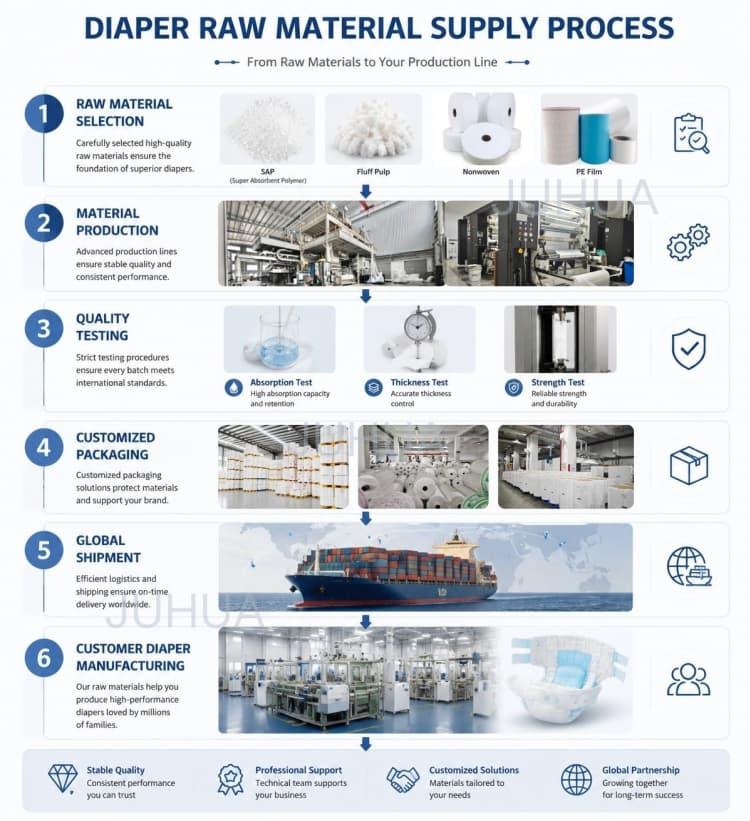
The first stage of diaper manufacturing begins with selecting suitable raw materials.
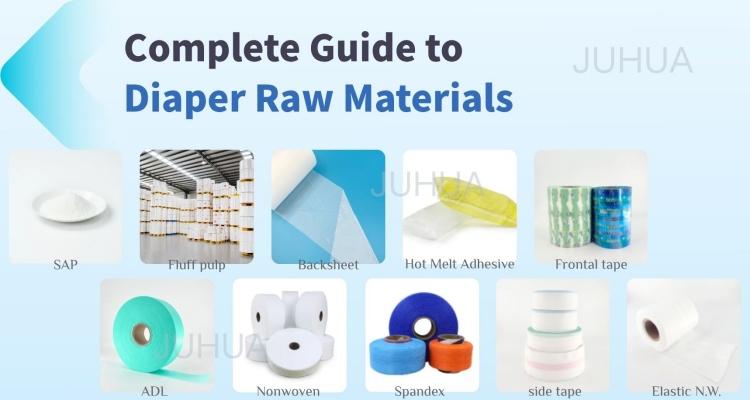
A high-performance diaper usually requires:
· Super Absorbent Polymer (SAP)
· Fluff Pulp
· Hydrophilic Nonwoven Fabric
· Acquisition Distribution Layer (ADL)
· Breathable PE Film
· Hot Melt Adhesive
· Elastic Materials
· Frontal Tape and Side Tape
Each material has a specific function:
· SAP provides high liquid absorption and retention.
· Fluff pulp helps distribute liquid and maintain core structure.
· Nonwoven fabric provides softness and comfort.
· PE film prevents leakage while allowing breathability.
· Adhesive ensures stable bonding between layers.
Consistent raw material quality is the foundation of reliable diaper production.
The absorbent core is the most important functional area of a diaper.
Manufacturers typically combine SAP and fluff pulp to create an efficient absorption system.
SAP can absorb and lock large amounts of liquid, helping diapers stay dry for longer periods.
Important SAP performance factors include:
· Absorption capacity
· Liquid retention
· Absorption speed
· Gel strength
Fluff pulp provides a fiber network that helps liquid spread evenly throughout the core.
A proper SAP and fluff pulp combination helps achieve:
· Faster absorption
· Better liquid distribution
· Reduced rewet
· Improved comfort
A diaper contains multiple layers, and each layer performs a different function.
The top sheet is the layer closest to the baby's skin.
High-quality nonwoven materials provide:
· Soft touch
· Good liquid penetration
· Comfortable wearing experience
ADL helps quickly receive and distribute liquid from the top sheet to the absorbent core.
Benefits include:
· Faster liquid transfer
· Improved dryness
· Reduced surface wetness
The back sheet usually uses breathable PE film.
Its functions include:
· Preventing leakage
· Improving breathability
· Enhancing wearing comfort
The cooperation between these layers determines the overall diaper performance.
Besides absorbent materials, supporting components are also essential.
Hot melt adhesive is used to bond different diaper layers together.
It helps provide:
· Strong bonding performance
· Stable production
· Better product durability
Elastic components are used in:
· Waistbands
· Leg cuffs
· Side areas
They improve:
· Product fitting
· Leakage protection
· Wearing comfort
Frontal tape and side tape help ensure secure and convenient fastening.
Before materials are supplied to diaper manufacturers, quality testing is essential.
Common testing items include:
For SAP and absorbent materials:
· Absorption capacity
· Liquid retention
· Rewet performance
For nonwoven and film materials:
· Tensile strength
· Thickness
· Softness
· Breathability
Testing includes:
· Bonding strength
· Stability
· Application performance
Strict quality control helps ensure stable production and reduce customer complaints.
After production and inspection, hygiene raw materials need professional packaging and transportation.
Common packaging methods include:
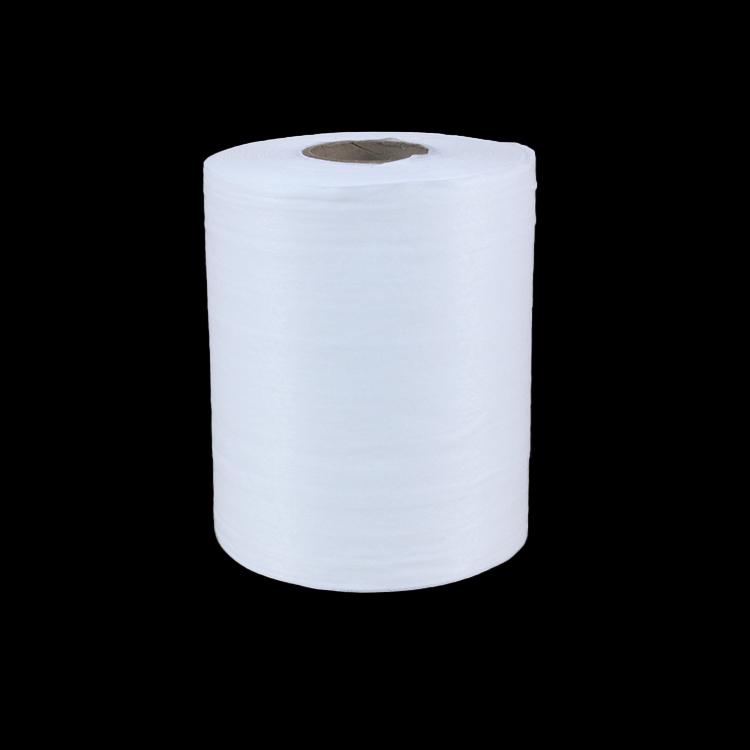
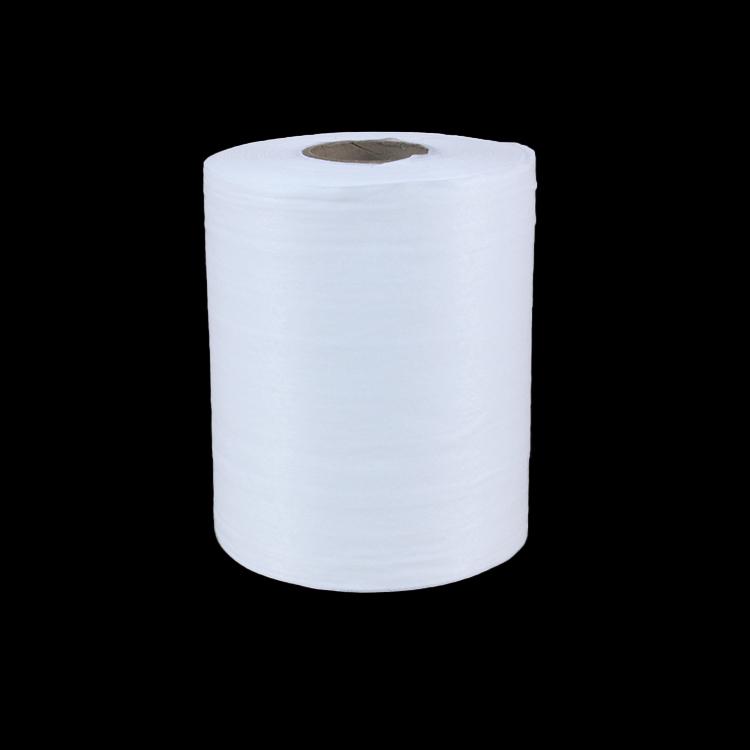
· Roll packaging for nonwoven and PE film
· Bag packaging for SAP and fluff pulp
· Pallet loading for international shipment
Reliable suppliers also provide:
· Export documentation
· Stable lead times
· Global logistics support
For international buyers, supply chain reliability is just as important as product quality.
A professional hygiene raw material supplier provides more than materials.
The right supplier can support customers through:
Helping customers choose suitable materials based on product requirements.
Providing technical recommendations for:
· Absorption improvement
· Softness enhancement
· Cost optimization
Ensuring consistent quality and reliable delivery.
For global diaper manufacturers and brands, a strong raw material partner helps create better products and maintain long-term competitiveness.
A European diaper manufacturer wanted to improve product performance while maintaining competitive production costs.
By optimizing the raw material combination, including:
· SAP selection
· Fluff pulp ratio
· Nonwoven softness
· Breathable PE film performance
the manufacturer achieved:
· Improved absorption efficiency
· Better wearing comfort
· More stable production
· Reduced material waste
Working with an experienced hygiene raw material supplier helped the company develop a more competitive diaper solution.
The manufacturing process of baby diapers depends heavily on the quality and performance of raw materials.
From SAP and fluff pulp in the absorbent core to nonwoven fabrics, breathable films, adhesives, and elastic components, every material plays an important role.
For diaper manufacturers and brands, choosing a reliable raw material supplier is essential for creating high-performance products and building a stable supply chain.
As a professional hygiene raw material supplier, we provide comprehensive material solutions for disposable hygiene products, supporting customers worldwide with stable quality and customized services.

 MP/WhatsApp: +86-18050806553
 Manufacturer Address:Juhua Industry Matou Town, Nanan City Fujian Province China