

Hot Keyword:
Author:Baby & Adult Diaper Materials FROM:Diaper Materials Manufacturer TIME:2026-06-26
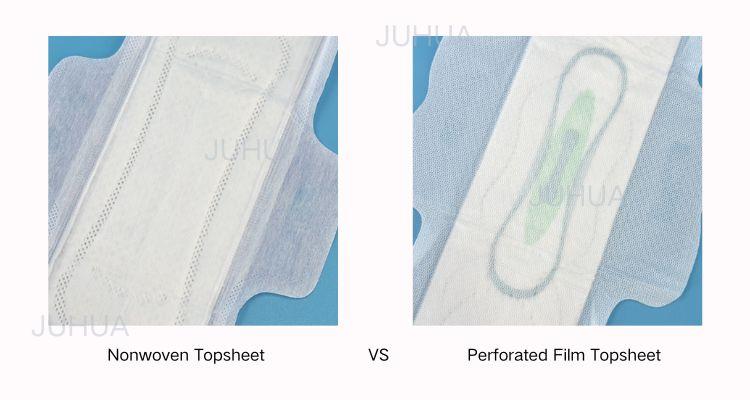
The top sheet is the first layer that comes into direct contact with the skin. Although it is thin, it has a significant impact on comfort, liquid transfer, dryness, and the overall user experience.
For sanitary napkin manufacturers and private-label brands, selecting the right top sheet material is essential to creating products that meet consumer expectations while balancing production costs.
The two most common options are nonwoven fabric and perforated film, each offering unique performance advantages.
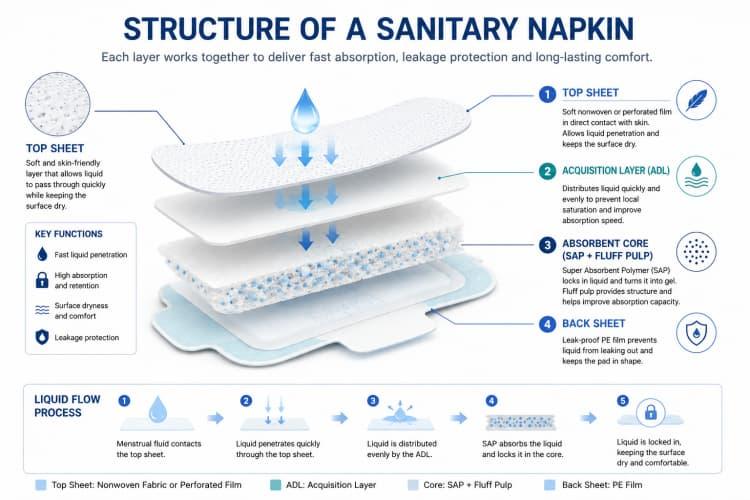
The top sheet is the uppermost layer of a sanitary napkin. Its primary function is to allow menstrual fluid to pass quickly into the absorbent core while keeping the surface dry and comfortable.
An ideal top sheet should provide:
· Fast liquid penetration
· Soft skin contact
· Good breathability
· Low rewet
· Comfortable wearing experience
The material chosen for this layer has a direct influence on product quality and consumer satisfaction.
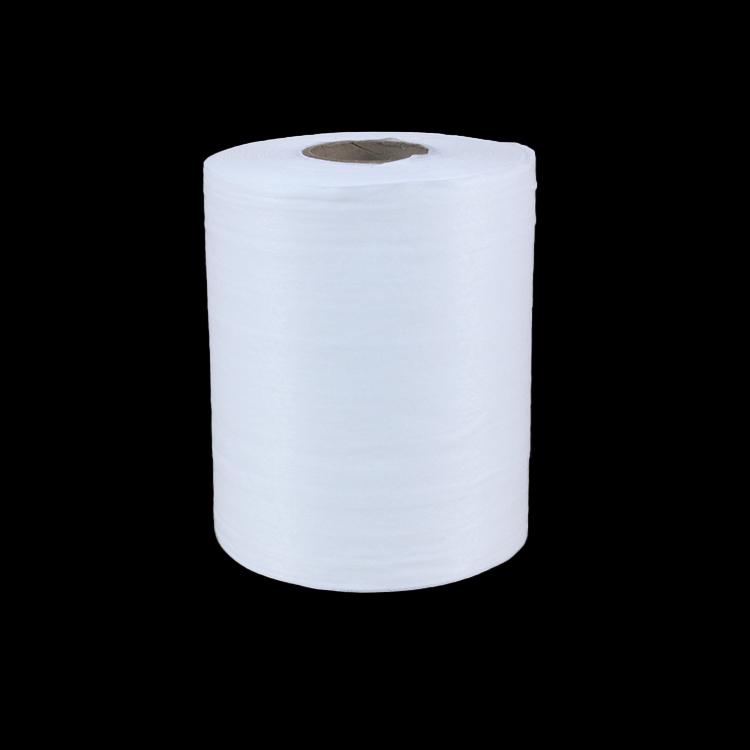
Nonwoven fabric is widely used in modern sanitary napkins due to its soft texture and excellent comfort.
Key advantages include:
· Soft and cloth-like feel
· Good breathability
· Comfortable for sensitive skin
· Excellent liquid transfer
· Suitable for premium sanitary napkins
Hydrophilic nonwoven fabrics are commonly used because they quickly guide liquid into the absorbent core while helping keep the surface dry.
Perforated film features a smooth surface with micro-perforations that allow liquid to pass through rapidly.
Its benefits include:
· Fast strike-through performance
· Excellent surface dryness
· Lower rewet
· Good leakage control
· Clean surface appearance
Perforated film is often selected for products designed to deliver a dry feeling during extended use.
|
Feature |
Nonwoven Fabric |
Perforated Film |
|
Softness |
Excellent |
Good |
|
Breathability |
Excellent |
Moderate |
|
Liquid Transfer |
Very Good |
Excellent |
|
Surface Dryness |
Good |
Excellent |
|
Skin Comfort |
Excellent |
Good |
|
Typical Application |
Premium & Daily Pads |
Overnight & High-Performance Pads |
Neither material is universally better. The right choice depends on your product positioning and target market.
When selecting a top sheet, manufacturers should consider:
Premium products often prioritize softness and comfort, while high-performance products may focus on fast liquid transfer and dryness.
Consumer preferences differ across regions. European and North American markets generally place greater emphasis on softness, breathability, and skin-friendly materials.
The selected material should work efficiently with the absorbent core, SAP, and production equipment to ensure stable product quality.
A reliable supplier with consistent quality and stable production capacity helps reduce manufacturing risks and maintain product consistency.
A private-label sanitary napkin brand planned to launch a premium product for the European market. The initial design used perforated film, but consumer testing indicated that users preferred a softer surface.
After switching to a high-quality hydrophilic nonwoven top sheet, the brand achieved:
· Improved softness and comfort
· Better customer satisfaction
· Higher repeat purchase rates
· Stronger premium brand positioning
This case demonstrates that choosing the right top sheet material can significantly enhance product value and user experience.
The top sheet is one of the most important functional layers in a sanitary napkin. Whether you choose nonwoven fabric or perforated film depends on your product goals, customer expectations, and market positioning.
Working with an experienced raw material manufacturer ensures consistent quality, stable supply, and technical support for developing high-performance hygiene products.
Looking for reliable top sheet materials for sanitary napkins?
We supply high-quality hydrophilic nonwoven fabric, perforated film, and other hygiene raw materials for manufacturers and OEM brands worldwide.
Contact us today to request samples or discuss your material requirements.

 MP/WhatsApp: +86-18050806553
 Manufacturer Address:Juhua Industry Matou Town, Nanan City Fujian Province China